|
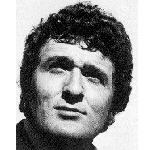
Harry SullivanIan Marter |
Harry Sullivan: The friendly imbecile by Michael Hoeller 2/4/98
Harry was the victim of perhaps the strongest, and most blatant insults by any one of the eight Doctors ("Harry Sullivan is an imbecile!"), yet he does not really deserve such a title. Perhaps it could be said that he wasn't overly bright (but no worse than someone like, for example, Jo Grant). But it is also worth mentioning that he was quite likeable, never allowing overt anger to surface. However, I think he suffers the same way as Adric does: ultimately, he's an unnecessary character.
As it was originally thought that an older actor would play the part of the Doctor after Jon Pertwee left, a character would be needed to handle any physical conflict, like Ian Chesterton some twelve years previously. But Tom Baker was chosen for the part, and Harry was relegated to a secondary role, providing comedy relief by some amusing verbal stoushes with Sarah-Jane Smith (perhaps seen best in Ark In Space). Unlike Adric, who was brought in partially to aid the transition between Tom Baker's "all-knowing" Fourth Doctor and Peter Davison's "vulnerable" Fifth Doctor, Harry original purpose had been removed, and he was little more than a comedic device.
Which leads me to the conclusion that except under the right circumstances (where there is an older Doctor, and/or when there are no female supporting characters), a male character in the style of Harry Sullivan has no purpose, and is therefore of no use. But all the same, he was a nice old imbecile, eh?
A Review by Stuart Gutteridge 9/12/03
If the Fourth Doctor had turned out to be less physically capable, it is reasonable to suggest that Harry Sullivan would`ve travelled longer in the TARDIS. Certainly there is something about the character which would suggest that he was out of his depth and not due to a lack of intelligence. Harry is at his best when use of his medical knowledge is brought to the fore, as The Ark In Space demonstrates. Similarly however his work with UNIT is a joy to behold and it is largely down to Ian Marter that this comes across so well. Harry may well be somewhat bumbling, but is by no means an imbecile.
GREATEST MOMENT:Going undercover to infiltrate Thinktank in Robot, complete (in perhaps a nod to The Avengers) with bowler hat.
A fine gentleman, an unprecedented companion by Konstantin Hubert 4/8/04
"You're improving Harry, your mind is beginning to work. It's entirely due to my influence -- you mustn't take any credit."If companion Harry Sullivan didn't lack self-confidence, if he were as prudent and respected as Ian Chesterton and permeated by the self-esteem and megalomania of an illustrious diplomat or businessman, if he weren't portrayed as an occasional target of mockery and as a TARDIS member unsuited to endure for a long time the perils and hardships of time travelling and had he not been as temperate as good-natured, then I deeply doubt he would have been the popular and unique character he really is. Unique not only in the pantheon of Doctor Who's regular characters but everywhere because, it should be acknowledged, we very rarely meet a character more or less similar to the bumbling but intelligent Harry Sullivan and still more rarely in science fiction (in Doctor Who I can think right now of only one character who resembles, to some extent only, Harry in demeanour and in the way he is treated by the others, the scientist Kerensky in City of Death). The defects of this companion - clumsiness, no self-esteem, undue calmness which he demonstrated even when disrespected - abase him in an undesirable level but compensatively render him original and sympathizing. No rational and self-respecting man would ever want to be like Harry in real life, to be object of disrespect, to be treated as a somewhat retarded person. So "negative" a man Harry Sullivan seems that Ian Marter, who animated him so convincingly and truthfully, had stated, perhaps because he feared they might associate him with his character, that Harry didn't represent at all his real-life demeanour and that he wasn't very satisfied with his character. And yet countless are those who have been fond of the unforgettable Lieutenant Surgeon Harry Sullivan.
- The Doctor to Harry Sullivan in part 1 of Ark in Space.
His decision to abandon at the first opportunity the TARDIS after a compatively short period (seven serials, Robot, Ark in Space, The Sontaran Experiment, Genesis of the Daleks, Revenge of the Cybermen, Terror of the Zygons and then a brief return in The Android Invasion) and especially the fact that he joined the Doctor during the so-called Golden Age of his adventures have surely contributed to making him still more unforgettable in the minds of fans, who by and large remember him more fondly in his "bad" moments. Who hasn't chuckled or been amused upon seeing the Doctor crying out "Harry Sullivan is an imbecile!", when Harry tried to remove the bomb attached to the Time Lord's body in Revenge of the Cybermen or when the Doctor taunted Harry by calling him a clumsy ham-fisted idiot in Ark in Space? In the first part of The Sontaran Experiment Harry helps Sarah stand up and yet she gives him a haughty reply, while in Robot the Doctor ties Harry up and shuts him up in a cupboard locker! His reaction to this treatment never included indignation or anger or self-defense as if he didn't feel any offence.
Apart from being an object of disrespect he was portrayed also as a rather unlucky man and perhaps his lack of luck, his unluckiness must have originated his lack of self-confidence. In the beginning of Revenge of the Cybermen for example as soon as he moves to pick up the Time Ring, which brought the time travellers back in the Space Station Nerva, it disappears, to Harry's embarassment, while in the subsequent adventure he is the one whose mind is possessed by the Zygons. In The Sontaran Experiment poor Harry falls down a deep hole, a pit, fortunately without injuring himself but in this two-parter his contribution proves of paramount importance and without his assistance the Sontaran might not have been defeated. In the end, the Doctor makes him realise he has succeeded but Harry is at a loss, perplexed. In his undesirable condition, Harry demands some compassion from the viewer and whoever likes him feels empathy for him, so that Harry through his defects, his fragility and weakness, neither physical nor mental, becomes popular, beloved.
His defects, although the highlights of his character, didn't overshadow his charismatic qualities, which he always displayed at moments of urgent need. Harry has been sometimes described as a man that couldn't succeed, that usually erred in his actions, an unjust and incorrect description. His high social status of Lieutenant-Surgeon, a doctor of the Royal Navy and therefore an educated person, considerably shields him against literal railleries of his being a loser or a fool.
In Harry naivety and clumsiness coexisted with intelligence and in every adventure he ended up being more or less useful, helpful to the independent Doctor, who had asked for his assistance few times. His contribution in The Sontaran Experiment, where he assisted in the defeat of Styre, makes no exception. In Ark in Space he demonstrates his medical knowledge and was the only regular character who used force against the Wirrn by shooting at an assaulting green larva, which he compelled to back out, thus protecting the Doctor and the humans. In Genesis of the Daleks, Revenge of the Cybermen and Robot, he cooperated or interacted well with the Doctor and Sarah, despite some unfair remarks or actions, which served humorous purposes. The Doctor and Sarah loved him as much as they loved to make fun of him (or would it be more accurate to say that they loved to tease him?) and knew he was a capable person as much as they realised that being calm by nature he was not liable to get angry. He had been at times unfairly treated by those two and yet he always remained peaceful and modest, never grumbled nor complained, while his good disposition never weakened. He was a kind, pleasant man and if one were willing to get along with him, to reciprocate his good disposition would have been sufficient.
If there is a defect that has really harmed Harry, then it has to be stability. In every adventure he helps and shows interest and his innocent, naive nature is more or less manifested, so that in every adventure Harry remains the same individual and unlike Sarah Jane he is presented only in one state of spirits; in other words, he isn't changeable in mood. We never saw him seized by wrath or by sadness or boasting himself and he showed not true joy or fear, while his not selfish nor vengeful attitude constantly refrained him from rivalling the Doctor and Sarah. In Terror of the Zygons he is transformed into a savage maniac, who attempts to kill Sarah but this wickedness doesn't astonish the viewer because it is attributed of course to the Zygons, who by possessing his mind had taken control of him. Harry in Robot doesn't contrast with the Harry of Revenge of the Cybermen and he is good, enjoyable in all adventures but there is no adventure where he excels. He is a somewhat predictable personality, it should be indulgently acknowledged however that during the short period he wandered in time and space, he didn't have much time to evolve.
Although Harry's introduction coincided with the Fourth Doctor's, Ian Marter's first involvement in Doctor Who goes back to Carnival of Monsters, where he played the role of John Andrews, an one-off character. It is said that his second and criticized character had been devised while the plans of the production team called for the Fourth Doctor to be elderly, but the casting of Tom Baker, who was just slightly older than Ian Marter, had made Harry look redundant. Producer Barry Letts had originally in mind the first TARDIS team and intended the new team to be modeled on it. This plan was never fulfilled and it was thought that alongside the youngest hitherto Doctor, Harry would come across as either as a rival or as a stooge and that he had to be removed soon and so since his debut his inability to endure time travelling for a long time and his innocent, bumbling attitude were made up as an excuse for his early departure.
Instead of becoming the first "Ian Chesterton" of the colour episodes, he was transformed into a genuine comic mechanism. And yet with this "redundant" and comical companion was formed a very good TARDIS team consisting of the 4th Doctor, Sarah Jane Smith and of course Harry: none of them old but all mature and clever adults, lively and vigorous, with a sense of humour that added flavour in their interaction and suggested their fellowship, Three Musketeers of Time and Space and as a symbol of their unity, I envisage the circle the three of them form while spinning through spacetime interlinked with the Time Ring; in other words, the last scene of Genesis of the Daleks and the opening scene of Revenge of the Cybermen. A symbol of their collectivity, all for one and one for all. Regardless of the fact that one member was at times derided, theirs was a wonderful and arguably the most suitable for adventures TARDIS team.
Ian Marter passed away in 1986 leaving this world early just like he bade farewell to the Time Lord early. Harry's departure didn't entail the end of Ian Marter's involvement in Doctor Who: he has been credited with the novelisation of nine serials and authored the novel Harry Sullivan's War, a freewill contribution that evidenced his affection for the programme. In the minds of all DW fans however, he will be remembered as the actor, who under unfavourable circumstances incarnated always pleasantly a character who with his innocent eccentricity, his good-natured, peaceful and naive demeanour, his unfortunate moments and a remarkable manner of disciplining his feelings won our hearts.
A Likeable Gent by Tim McCree 16/4/11
Although Nyssa of Traken is my favourite Doctor Who Companion (I have a review of her here), there is another that also features in my favourite list, Dr. Harry Sullivan MD. Played by the late Ian Marter, Harry was introduced in Tom Baker's first story, Robot. The idea for Harry came because, before Mr. Baker was cast as the Fourth Doctor, they might need another character to handle the heavy lifting, should an older actor be chosen for the role. When Tom Baker, who was around forty at the time, got the role, it was clear that he could do the aforementioned heavy lifting himself. So the primary reason for Harry was no longer valid. However, they kept him on the show. This might have cost the character some much needed development.
Another reason that Harry was underdeveloped was because he had arrived on Doctor Who at the wrong time. He was part of the UNIT family, when UNIT was on its way out. (Then-Script-Editor Robert Holmes felt that UNIT had overstayed its welcome once the Jon Pertwee era was over.) With the arrival of the Fourth Doctor, it was felt it was time for Doctor Who to get away from the constant 20th Century Earth stories of recent years and back into space. Once again I feel that Harry's character development suffered because of this decision.
However, for the short time he was on the show, Harry Sullivan was, in my opinion, a likeable gent. He did seem somewhat old fashioned at times, he was very protective of Sarah Jane Smith, even though she continually told him she could look after herself. His constant calling her "old girl" and "old thing" also rubbed her the wrong way. However, she did see him as a loyal friend, despite his flaws.
For the duration of Season Twelve (Tom Baker's debut season), Harry accompanied the Fourth Doctor and Sarah Jane on their travels. Thus he had run-ins with three popular Doctor Who monsters, the Daleks, the Cybermen, and the Sontarans. These adventures showed Harry that there was more to the universe he was living in. At times, Harry did rise to the occasion when circumstances dictated. He helped fend off an attacking Wirrn in Ark In Space, he was ready to clobber the Sontaran in The Sontaran Experiment, he punched out several bad guys in Genesis Of The Daleks (background information for Harry said that he had boxed during his Navy years). Of course, his medical skills also helped from time to time. However, Harry also had a bumbling side that sometimes got him into trouble.
The most infamous of these happened in Revenge Of The Cybermen, when Harry accidentally started a rock fall. This was the incident that caused the Fourth Doctor to bellow: "Harry Sullivan is an imbecile!" at the top of his lungs. Despite that, however, Harry did help out in the end. However, travelling in time and space was not for Harry. In the opening episode of Season Thirteen, Terror Of The Zygons, when the TARDIS returned to 20th Century Earth, Harry chose to stay there, rather than travel with the Doctor and Sarah. He would make one final appearance on the show, in The Android Invasion, later that same season. That would be the last we would see of Harry Sullivan, on the show at least. Despite his short run on the show, Ian Marter was a big supporter of Doctor Who and often promoted the show at various conventions. He also novelized several adaptations of Who stories for Target books (including two he had appeared in, The Ark In Space and The Sontaran Experiment). In the mid-1980's, Mr. Marter got a chance to expand Harry's character in the original target novel, Harry Sullivan's War. This novel found Harry, now working for NATO, involved in a spy adventure worthy of James Bond. The novel sold well, and a sequel was considered; sadly, it would never be written. In 1986, Ian Marter died of a diabetic related heart attack, he was only forty-three years old.
It would not be until the original Doctor Who novels (first by Virgin and then BBC books) appeared in the 1990's, that Harry would show up again. Two of the books, System Shock and it's sequel, Millennium Shock, found Harry now working for MI5 (British Intelligence). Two other novels, A Device Of Death and Wolfsbane, were set during Harry's travel with the Fourth Doctor and Sarah Jane; finally, Face Of the Enemy, featured Harry in his pre-UNIT days. All these books showed us what a good character Harry could be if given the proper character development. It is sad that Ian Marter is no longer with us. Had he lived, I could easily see him appeared on the new Doctor Who series, or perhaps the Sarah Jane Adventures (the spin-off starring Elisabeth Sladen). Perhaps his character would have been given more development then. Alas, we'll never know.
Harry, you were a fine gent. Although your time on Who was short, you have earned a place in the heart of Doctor Who fans everywhere.