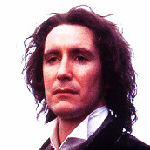
The eighth Doctor's era
(1996-2005)

Paul McGann
|
|
The eighth Doctor's era(1996-2005) |
Paul McGann |
So Much More Than Just The TV Movie by Stephen Maslin 19/10/10
Here's an old chestnut: canon. What is or is not Doctor Who? Naturally, the TV stories are the backbone of any list (though Dimensions in Time is a moot point) but there is of course that annoying fifteen year gap. The Doctor never left us but the medium changed. After the 'classic' TV from 1963 to 1989 came the Virgin New Adventures book range, then the 1996 TV movie, then more books (the BBC Eighth Doctor Adventures), then Big Finish's first four seasons of Eighth Doctor stories, then back to TV in 2005. To the alarm of Tom Baker fans, taking all these as canon, the Seventh and Eighth Doctors were thus incumbents for longer than any of the others, nine years apiece (as opposed to Tom Baker's seven, Jon Pertwee's five, David Tennant's four and so on). If TV appearances were the only relevant yardstick, then the Eighth Doctor would remain a very peripheral figure. But he wasn't. In the dark days after the TV movie, the image of the current Doctor, in all media, was that of Paul McGann: on the covers of original fiction, in DWM's comic strip, and latterly that gorgeous voice on audio.
What makes people reluctant to accord the Eighth Doctor a loftier status is the sad fact that the 1996 TV movie just wasn't any good. Shame, as many of the books and audios really are. One thing that made them so much better was a general acceptance that a return to TV was not coming any time soon. They were allowed to explore, without worrying how that exploration might upset the plans of television execs or Mary Whitehouse. Initially, however, the BBC books seemed to have gone for a far too generic companion in Sam Jones (her comic strip counterpart, Izzy, being far more believable) but with the introduction of Fitz (and later Anji and Trix) the TARDIS became a more compelling place to be. The audios went the opposite way, starting with the peerless Charlotte Elspeth Pollard, the quintessential Eighth Doctor companion, only to ruin the dynamic by adding C'rizz to the mix. Charley, like Fitz, added the extra fun of a having a non-contemporary British human, the world of the audience almost as strange as the worlds they visited. C'rizz added a lot of talk about alien lizard physiognimy. I shall leave you to pick which has the more dramatic potential.
There are three distinct periods when the Eighth Doctor was at the centre of sustained runs of really good stories: the Caught on Earth books of the second half of 2000, the books and audios of the first half of 2002 and a late flowering during the latter half of 2004. Elsewhere, the books were cursed with lengthy and uninteresting story arcs and the audios disappered for nearly 18 months in mid-2002 prior to a somewhat mixed return. Yet with each recovery of form there was still a great deal to say, the Eighth Doctor proving himself a very durable character (and an extremely likeable one).
Of the early books, Alien Bodies, Seeing I, The Janus Conjunction and Shadows of Avalon are classics, as are the first two stories of the Caught On Earth arc, The Burning and Casualties of War. As with those Seventh Doctor New Adventures that came after the TV movie, some of the finest EDAs came after the focus had perhaps shifted elsewhere (to having Paul McGann actually voicing the Doctor for Big Finish). EarthWorld, The City of the Dead, Anachrophobia and The Crooked World are four of the best Doctor Who novels ever written and though The Council of Eight arc leaves me cold (in fact, story arcs in general), four of the novels that follow, The Tommorow Windows, The Sleep of Reason, The Deadstone Memorial and To The Slaughter maintain an impressive level of quality (before The Gallifrey Chronicles ambiguously wrapped things up).
The problem with the books before 2001 was that the voice in one's head had to be based upon the TV movie, which wasn't much to go on, either quantitively or qualitively. It was Big Finish's audios that allowed McGann's distinctive interpretation to flourish. Suddenl, the current Doctor was right there in front of your ears. But Big Finish almost blew it. The first four stories were rushed, both in terms of writing and production; Storm Warning aside, they can hardly have convinced anyone that a run of Eighth Doctor audios would be a good idea. Thankfully, Season 2002 dramatically changed all that. Big Finish excelled themselves in every department: casting, sound design, music, scripts. Paul McGann finally was the Doctor. The six stories of Season 2002 are the pinnacle of Eighth Doctor stories in any media, though Season 2004 (Faith Stealer, The Last, Caerdroia and The Next Life) is not that far behind. Those that came after Eccleston's TV stories were in too much of a shadow to make any impact which, in the case of Other Lives and Memory Lane at least, is a great shame. But these are outside the Eighth Doctor era, as are the often-infuriating New Eighth Doctor Adventures.
The McGann moment that gave me more pleasure than any other was the audio release of Shada. (Forget the webcast. The images are rubbish and only serve to remind you that it's not proper telly. Close your eyes and use your imagination.) Part of the audio bunfest that accompanied the 40th anniversary year, Shada 2003 had the future and the past cosying up together in a sumptuous rendition of a Douglas Adams script that never got its due. Paul McGann and Lalla Ward have a great chemistry and carry off the action and the comedy gloriously. A joy, a perfect joy.
By the time Christopher Eccleston was on our screens, I had come to love the Eighth Doctor in a way that I'd never have thought possible back in 1996. The only unquestionable success of the TV movie was that Paul McGann was a superb bit of casting and I'm extremely grateful to the BBC, and particularly to Big Finish, for not letting his Doctor just disappear.
The 8th Race (or The Canon Wars) by Kory M. Stephens 21/12/13
Having been in this fandom for six years, I've learned a lot about the Wilderness Years; especially the last eight years before the show returned from life support. While Christopher Eccleston was my first Doctor, Paul McGann is THE Doctor to me not just because of one TV Movie but the audios, comics and the novels. Those three areas rescued McGann from being christened the George Lazenby/Alan Arkin (Arkin played Inspector Clouseau forty-five years ago in the film of the same name while Peter Sellars and Blake Edwards did The Party) of Doctor Who. I have to laugh at those who keep denying the Eighth Doctor's existence just because of one little line they go insane over more than Sarah Jane saying she's from 1980 when her hairstyle screams 1975. So, he said he's half human on his mother's side. SO WHAT?! It's not that serious anymore than the so called "Morbius Doctors" (that's a topic for another time). But the time after the broadcast of the Telemovie has, to me, been the most turbulent time in the program's fifty year history and for fandom. While we've been told or implied that this Doctor fought in the Last Great Time War, there was already one between three genres for the role of primary Doctor Who.
This "Time War" began with Gary Gillatt's tenure as Editor at Doctor Who Magazine. It's no secret that he had/still has a huge disdain for the Virgin New Adventures and everything about it (including the long-revered Bernice Summerfield) so figured the way to make what he thought was "real Doctor Who" known than to kill off Ace with the aid of writer Scott Gray in the Seventh Doctor strip Ground Zero. Looking back on it, it was a very daft decision. It's like cutting your own limb off thinking you'd be better off even though there's nothing wrong with it. But it was only the beginning of the War for Canon supremacy. The Eight Doctor strips began with the Doctor returning to Stockbridge and saving it from the Celestial Toymaker with the aid of the village's resident UFO nut Max Edison and his young friend Izzy Sinclair who automatically became his new companion. The Byronic traveler and his Sci-Fi-loving chum hit the ground running in their first batch of stories in the first year. While drawn by Martin Geraghty, McGann's likeness remains intact while Izzy visualization has undergone three faces over the last 16 years: in the beginning, she first bore a resemblance to singer Louise Wener of the band Sleeper, then later the actress Luisa Bradshaw-White of This Life fame and most recent (via Big Finish Productions) actress Jemima Rooper. While the DWM ushered in its first Renaissance since the Sixth Doctor strips, on the prose front things began to get ugly.
In 1997 (a year after the TV movie), the BBC stripped Virgin Publishing Ltd of its Who license and took it in house. For many who enjoyed the New Adventures (though Bernice Summerfield continued until the decade's end), it was a bitter blow and a mistake; a mistake still felt in the eight years since the show returned. Gone were the too broad/too deep adventures the NAs were known for and in its place was the chaotic period of the BBC Books Editorship of Nuala Buffini and later Stephen Cole. To start off the newly born Eighth Doctor Adventures, Buffini chose former script editor Terrence Dicks to kick it off with the most offensive book ever to be published in both his name and Doctor Who's: The Eight Doctors. Dicks was very bemused by how the TV Movie represented Doctor Who so, instead of writing what should've been a new story much like his previous NA efforts, he went the opposite direction by writing the most poorly written, continuity drenched, multi-Doctor story ever completed with creating the doomed companion, the much-maligned Samantha Jones. The book not only served as a grand example of why the BBC should take everything in-house but a black spot Terrence Dicks's cred with fandom. The arrival of the next book, Vampire Science, and the other two made up for it but the fifth one would cause a mighty uproar.
Another writer whose cred got deep sixed because of his disdain for what he thought Doctor Who did wrong was John Peel. His two Dalek novels War of the Daleks and Legacy of the Daleks were and still are the most awful piece of prose ever written. War not only went out of its way devoiding Eight and Sam of any personality but did a gruesome hatchet job on Dalek stories from Destiny to Remembrance (especially Skaro's destruction). Sometimes I wonder if Terry Nation not only hated Remembrance but whether or not he had a grudge against Douglas Adams.
The turbulent period saw the return of "Mad Larry" himself, Lawrence Miles, with his fantastic Faction Paradox. His first three books in the range were the most spellbinding and, above all, revolutionary. These days, whenever you think of the Matt Smith's Doctor dying at Lake Silencio, it lifts from Alien Bodies. It's no secret some think Steven Moffat's ripping off that book and The Adventuress of Henrietta Street for his flimsy ideas and poor resolutions (I'm looking at you, River Song and The Name of the Doctor!) and my god is it showing!
While Eight and Sam dealt with the Faction and other baddies, they were joined by a male companion who is the most revered and loved after Benny: Fitz Kreiner. Another Miles book that turned Doctor Who inside out was the mammoth Interference that not only saw the exit of Sam and the arrival of Compassion but the retcon of the Third Doctor's regeneration (later restored). Before the recent John Hurt hoopla, there was Three dying on Dust instead of at UNIT HQ. Of course continutity still reared its ugly head as if it became a burden to the audience. When the year 2000 rolled in, a drastic change was made: the destruction of Gallifrey. For those new to Who, the fandom of old have a huge yet bizarre bone of contention towards the Time Lords and have a defeatist logic that they're better off dead (including Romana!) and there's nothing interesting to be done with them. Big Finish begged to differ there, but even that's fallen on deaf populist ears. Though the line got better with the Caught on Earth arc, Anji, Trix, and Sabbath.
Speaking of Big Finish, the company gained the license to make Doctor Who audios after the success of the first six Bernice Summerfield audio adaptations. In 2001, Paul McGann returned to the role for brand new audio adventures that have been ongoing for now thirteen years. For the first five to seven years, the Doctor was joined by self professed "Edwardian Adventuress Charley Pollard (India Fisher) and later the criminally maligned and underrated Eutermisan woobie C'rizz (Conrad Westmaas). The first two seasons centered around Charley and how the Doctor saving her from the R101 caused ripples to the Web of Time leading up the controversial 2003 audio Zagreus. For those who hate it, there's no love lost between jilted customers who were expecting a traditional multi-Doctor story and its co-author and former Big Finish Svengali Gary Russell deciding to segregate the 8th Doctor's timeline into three alternate timelines: sepeating the audios, the novels and the DWM comic strips. For those who follow Russell's works over the years, it's no secret that he enjoys his alternate timeline ideas. Pity Jason Haigh-Ellery never pulled him to the side to tell him to leave it out.
The so-called alternate timeline idea has been well abandoned in the years since Russell left his duties to Nicholas Briggs. From 2007 to now, Big Finish catapulted listeners to a later period of the Eighth Doctor's life, which included the Blackpool native Lucie Miller (Sheridan Smith), struggling actress Tamsin Drew (Niky Wardley), WW1 Voluntary Aid Detachment Molly O'Sullivan (Ruth Bradley) and soon joining the list next year Kaldor City native Liv Chenka (Nicola Walker) from the Seventh Doctor audio Robophobia. The period also saw the return of his granddaughter, Susan Campbell (nee Foreman), and, albeit briefly, her son Alex (played by McGann's own son Jake). In the wake of the Briggs era, The Bodysnatchers was referenced in Paul Magrs' 2008 audio The Zygon Who Fell to Earth and the following year 2009's The Company of Friends (featuring Benny, Fitz, Izzy and Mary Shelley) officially put the last nail in the coffin for a long bitter war for what was canon. Further, in 2012, Eight abandoned his Wild Bill Hycock attire for a dark blue naval leather jacket, denim jeans, brown boots, "manbag" and a new steampunk sonic screwdriver for the financially and critically successful Dark Eyes boxset.
Of course, the war actually ended with the return of the TV series in March 2005 with Christopher Eccleston as the Ninth Doctor, with Billie Piper in tow as Rose Tyler. The return saw a bad patch for all three spin-off media. For BBC Books, they ceased publication of the EDAs and the PDAs in favor of tie-in novels to the New Series. However, there have been four new books since the Matt Smith/Steven Moffat era that were right up the EDA/PDA alley and a new eBook series in the works. Big Finish sales dipped briefly during the Russell-Briggs transition period in 2006-2007. The media most hit was Doctor Who Magazine, who had plans to make a Ninth Doctor Year One arc with then Eighth Doctor Companion, the Oblivioner Destrii. Due to the BBC, RTD and Julie Gardener wanting Nine to only be seen with Rose, the Year One plan and the regeneration panel was scrapped; the strips suffered for a time with mediocre stories only to gain its mojo again by the time David Tennant's tenure started.
There's a lot to be learned from this and there's a damn good reason why the BBC will never pull a Gene Roddenberry and decide what's canon and what isn't (The Adventure Games notwithstanding). Its up to you, the viewer, the listener, the reader to decided what you consider what happened and what didn't without treating your opinion as "facts". Otherwise, history would repeat itself. And, no matter the direction, the Eighth Doctor is still the romantic, byronic traveler with a love for all life who later became battle hardened by what would lead to his role in the Last Great Time War.
"The Doctor's Promise" by Thomas Cookson 1/7/18
As the Doctor, Paul McGann pretty much hung up his frock coat immediately after his 1996 debut. It took some cajoling from Big Finish before he reprised the role on audio, but, from 2001 onwards, he built up a backlog of seasons of his own superlative, exclusively aural era.
Two seasons' regular adventures with Charley, two more in the Divergent Universe, then one last run with Charley. Then four seasons with Lucie Miller, followed by the Dark Eyes' quadrilogy, the Mary Shelley trilogy, alongside specials like Shada, Light at the End, An Earthly Child, The Four Doctors, Company of Friends and a brief cameo in McCoy's Klein trilogy.
McGann's Doctor started out as an innocent. He represented a refreshing clean slate for the character, conceived after a lengthy, healthy hiatus for the show. Because the TV Movie was tailored for American audiences, it almost cast Tom Baker instead of McCoy as McGann's predecessor.
McGann didn't feel tainted by the same DNA as his 80's forebears. He seemed a return to innocence and surety for the character, after a string of increasingly neurotic, unstable, darker incarnations. With him we could put out of mind McCoy destroying Ace's faith, Colin torturing Peri in Mindwarp or Davison threatening Davros and remember the Doctor as we liked to and treat everything post-Logopolis as a mere inconvenience.
The EDAs wrote him as the traumatized destroyer of Gallifrey. Big Finish backlashed against this by canonically discounting the books and returning McGann to the jolly, romantic adventurer.
Then events conspired to put him through the wringer again on audio. We entered the Divergent Universe arc of abuse and suffering on a loop. An experiment that didn't really go anywhere before being prematurely curtailed eight stories in.
With Doctor Who returning to TV and new fans being potentially drawn to the audios, it wouldn't do having McGann's range still running a convoluted, alienating arc where the Universe's normal rules don't apply. Making McGann's comeback Terror Firma a Dalek/Davros story was definitely a sales pitch, which again put McGann and companions through hell, but delivered a beautiful 'primal scream' catharsis.
With McGann no longer the current incumbent, Big Finish were possibly thinking of giving McGann an 'endgame' to provide a transition between old McGann and Eccleston's emotionally scarred war-survivor incarnation.
We knew that, somewhere along the line, McGann was destined to fight an apocalyptic war on Gallifrey against the Daleks. Terror Firma begins McGann's slippery slope toward the path of vengeance and not being quite the same man anymore.
In Lucie Miller/To The Death, he and Lucie share some of the most beautifully authentic exchanges. It ends with McGann finally snapping, declaring his vengeful intent to return to Genesis' events, to the incubator room and exterminate the Daleks properly this time.
When the Mary Shelley prequel trilogy followed, I assumed this backtracking meant McGann had now had his ending, and his destiny surely lay now in the unseen Time War. As Hugh Sturgess argued, we don't know what McGann's audio destiny would've been without New Who. Maybe McGann's audios would've taken a more optimistic, less fatalistic direction. Or maybe there'd always be that fannish impulse to push the franchise down darker, more punishing paths and recreate our hero's grimmest moments.
But, just as McGann's destiny seemed sure and certain, Moffat threw a spanner in the works, by retconning the existence of John Hurt's War Doctor.
Suddenly Big Finish's character journey drawing McGann closer to the experiences and personality of Eccleston was for nothing. Eccleston was no longer McGann's successor. McGann no longer had any part in the war. In fact, Moffat had recast McGann as a cowardly deserter of a war that threatened all creation. Moffat's reasons made little sense. I could envision McGann fighting the war easier than Hurt rescuing Davros from the Nightmare Child.
But apparently after years of RTD's era taking it for granted what happened, Moffat and fans suddenly couldn't envision McGann being the one who pressed the button that destroyed Gallifrey, which supposedly explains the necessity of creating a new incarnation who didn't press the button either.
Wilfully ignoring how if McGann fought in the war, it's because he didn't have a choice in this desperate situation. By undoing that, Moffat's taken away that desperation and its drama. Suggesting the Doctor, instead of answering the urgent call to battle, decided to fuss instead for years over which incarnation he'd feel more comfortable fighting it in.
It feels wrong that McGann's curtailed TV life wasn't so much wrapped up as dismissed in Night of the Doctor's short minisode. Even "Four minutes? That's ages!" seemed calculated to convince viewers this was sufficient screentime for McGann. Naturally, fans lapped it up because it was better than nothing.
In this Androzani redux, McGann sacrifices himself trying to save Cass despite her refusals (although surely accepting his lift, then fleeing him hysterically the next safe place they land would've made more sense). Then McGann claims he'd rather die than help save the Sisterhood!
The Sisterhood function here as the dark shamans of the horror genre, to teach our innocent hero that to fight evil, he must willingly ingest some of that evil into himself. Unfortunately, this means four minutes of them repeatedly explaining the obvious to an irrationally obstinate McGann.
Yes, McGann's arguing more to exhaust his hopeless stance than maintain it. Maybe subconsciously he wants to be persuaded. His moral protests are merely a formality he's getting out the way. His fervent eyes conveying how scared he is of being sent over the edge by this war.
Perhaps it'd be better had McGann visited the Sisterhood willingly, explaining he knows he must fight but isn't suited for being a warrior in this incarnation. That way there'd be genuine tension and build-up as he prepares to drink the cup, dreading what he's sacrificing and what he'll become.
The idea of the Doctor is that he's a keen connoisseur of literature. He knows what being a hero means, what marks out a villain and possesses an empirical understanding of people and societies.
But literary heroes sometimes must resort to violence, full spiritedly, to defend what they believe and sometimes must kill enemies. As a literary connoisseur, the Doctor knows this. Ideally, it means he knows where certain fictional heroes went wrong and knows when there's a better way. He also knows when not to adopt the actions that could easily mark him as the villain of the piece (but, as in The Invasion of Time, he'll even adopt that role if necessary). He won't abandon the helpless Master to Kronos' eternal torture, because that's something the Master would do. Nor kill helpless infant Daleks in Genesis, especially if Gharman promises a better way.
What made McGann's Doctor refreshing was being clearly cut from the same cloth as Tom's Doctor. Being well-read, well-learned, a good study of character and a Byronic cosplayer. By eschewing the philistine JNT Doctors, he was allowed to be back in touch with the power of literature and accumulative knowledge of his experiences. On audio, he was the most shrewdly 'knowing' of Doctors. More likely to sarcastically retort that it's probably his cue to be racked with guilty angst over destroying Skaro before asserting his rightness of position, than wallow genuinely.
Hence why I renounce Warriors of the Deep as an aberration. It renders the Doctor an illiterate Luddite concerning his entire back catalogue of what literature should've taught him about the human spirit and dignity and the necessary actions of heroes against a greater threat. None of which should shock or horrify him into condemning and stopping the humans from defending themselves, but here it does. Consequently, nothing he's learned means anything anymore. Suddenly rendering our entire catalogue of creative works and human spirit behind them pointless, aside from some misremembered version of The Silurians.
But even Davison wasn't above waging war against Daleks (even via plague-bombs). Fighting Daleks is what he does. Perwee immediately joined the Thal platoon on Spiridon. Troughton's Doctor was virtually an al-Qaeda terrorist concerning the Daleks.
Likewise in Blood of the Daleks, in a manner I found troubling, McGann had no qualms helping the Skarosian Daleks wipe out a new Dalek faction, despite having no conclusive evidence that Martez' new breed was actually evil or irredeemable, given throughout the story they'd only ever demonstrated aggression when under threat.
He explains that Dalek existence is a perpetual nightmare and therefore destroying them is practically a mercy killing. Also these new Daleks' existence makes this world forever a target to their intolerant brethren. If they breed, their internecine war will spread across the galaxy. The sooner this new breed's vanquished, the sooner maybe the Daleks will leave this colony alone.
Steve Lyons' original script would've made this more lucid, whereby Martez subjects herself to mutation to gain greater strength of will, only to become overwhelmed by the Dalek will and losing the battle to preserve her own (which would've made her martyrdom make more sense). Demonstrating the Daleks' perpetual enslavement to an evil compulsion.
So, I don't get Moffat's reasoning for having McGann remove himself from an almighty war against his greatest enemies, rather than fight the good fight like heroes do. Like Lucie ultimately died doing. Surely it's his duty to honour her sacrifice, not letting her death be in vain. Yet that's exactly what Moffat's McGann does, as though Lucie's death and Romana's friendship meant nothing to him. As it's no longer the impetus for McGann going to war with the Daleks, Moffat's retcon has rendered Lucie's death pointless.
Moffat's rewritten McGann's Doctor into an illiterate philistine, not just in ignorance of literature's heroes, but his own memories and experiences. To Moffat, the Doctor's always been a hopeless square. Apparently now he forfeits the role of hero in this war based on the infantile belief that war is bad and if you're part of war, you're a bad person and the Doctor won't like you if you're a soldier.
Ultimately, Moffat must rewrite the Time War to have a happy ending because he's retconned McGann into someone who willingly let the war get that bad by his neglect. It's no longer the case that McGann's Doctor did everything he could and fought his best (or even at all) to save his people.
The Dalek Empire audios frequently depicted horrific events that galvanised our desire to see McGann's Doctor right these terrible wrongs and vanquish the Daleks. That Moffat would sabotage and scrap his avenging role and render him almost sociopathic in his indifference leaves a nasty aftertaste. It's putting so much creative, dramatic work to waste. To twist McGann' convictions upside down so that he'd see it as a matter of principle to do nothing to fight the Daleks as they tear apart his world and the universe.
Since then, Big Finish has had River Song appear in several box-sets alongside McGann. This infiltration of River and other Moffat-isms into McGann's audios bothers me. Especially the idea of making River part of McGann's timeline. River initially promised she'd only be crucial to the Doctor's future mythology and nothing more. Her omnipresence in Matt Smith's era was enough.
Any previous Doctor's mythologies, concerning the Time War, the Valeyard, why Hartnell left Gallifrey, should remain their own, without featuring nor needing River. But learning she was observing omnisciently during the Time War's prelude feels like she's invading and tainting other mythologies. Her presence overstretching and overbearing on the Doctor's past.
Moffat's writing has become corrosive to the show's entire past narrative and its meaning. His attitude concerning Clara, Danny and Missy's motivations seem to simply be 'just because'. Moffat's been making his arc up as he goes along, and his every absurd past retcon too.
Having Moffat's corrosive era invade the audios, the last shelter from his damage, where McGann's journey seemed to have a destination and purpose before Moffat robbed him of it, makes me question if there was any point investing in them in the first place.