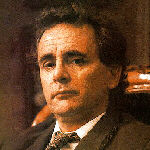
The seventh Doctor's era
(1987-1996)

Sylvester McCoy
|
|
The seventh Doctor's era(1987-1996) |
Sylvester McCoy |
Fall and Redemption by Robert Smith? 10/10/01
The New Adventures were about many things. They were about growing up, they were about both losing and keeping childhood heroes and they were a reflection of the decade they spanned. But fundamentally, they were about the seventh Doctor, the master manipulator, the destroyer of worlds, Time's Champion, the Ka Faraq Gatri, the man that monsters have nightmares about and the funny-sad clown who just wanted to entertain children.
Following the hints in Seasons 25 and 26, the NA Doctor evolved and developed beyond the original Cartmel masterplan, becoming more and more complex and manipulative. The editorial team laid down some strict rules concerning the Doctor: he was to remain a mystery, a larger-then-life force and unless you were a 900 year old Time Lord yourself, you weren't going to write his internal thoughts. This gave the Doctor a mysterious and unknowable quantity, as well as bringing much needed focus to the companions. However, despite a great deal of companion angst, the NAs never lost sight of their central character.
Partly this was because the companions came and went (and came back again), while the Doctor never changed. Partly this was because they'd inherited a character who couldn't put a foot wrong, in terms of characterisation. Andrew Cartmel's background had been in comics, so it's no surprise that the seventh Doctor was much more of an archetype than his predecessors. Nothing as mundane as a superhero, of course, but the character was both robust and flexible, allowing multiple interpretations, but always feeling consistent.
With Ace's teenage angst and Benny's wit being similarly strong character-defining traits, the writers were blessed with a TARDIS crew who were virtually writer-proof. A lot of work had gone into the setup behind the books, with a mixture of obvious and subtle story arcs playing themselves out and a well-developed future history playing in the background. This gave the stories a great deal of internal consistency and plausibility. They reigned in the concept a little in terms of space, but they made up for it in character.
In Love and War, it's suggested that the unborn seventh Doctor deliberately piloted the TARDIS into the Rani's beams so that the sixth Doctor might pass and the seventh come into existence. It's said that Time herself needed a champion and it was the seventh Doctor who would arise in the hour of the universe's greatest need to save countless millions in ways the sixth couldn't.
And, it must be said, he really does. He makes decisions no other Doctor seems capable of - the destruction of Skaro is the biggest, but there's also the manipulation of Ace in The Curse of Fenric to save the future of Earth. The New Adventures let this idea run and run, so the Doctor was manipulating not only his enemies but his friends as well. In fact, the Doctor in the early New Adventures seems to set himself up with a series of pseudo-companions, as though he's putting the pieces together to prevent some vast intergalactic catastrophe. Not only do we have characters who were almost companions like Kadiatu and Ruby, but there are former companions we've (almost) never heard of like Miss David in Warhead.
The manipulation of the companions meant that we were in for a lot of TARDIS angst over the years. Things reached something of a head in No Future, where Ace out-manipulated the Doctor and a truce was reached. However, the Doctor still made questionable decisions, often placing the needs of the many ahead of the needs of the few. Here was a character who felt the weight of responsibility that the Doctor had to carry with him over the centuries. He held countless lives in his hands and often had to choose who would live and who would die. And without seeing his thoughts directly, we were left wondering if he agonised about those decisions or not.
The Fall of the seventh Doctor was a slow one. He murders Ace's lover in Love and War, he lets a mad villain wipe out a whole solar system in The Pit and he shoots a villain in the head in Lucifer Rising. All were done with the best of intentions and saved billions of innocents in the process, but it's little wonder some fans felt that the NAs had strayed from the original concept.
Human Nature saw the first steps to redemption. The human Dr Smith lives an ordinary life, falls in love and ultimately has to sacrifice himself to restore the Doctor who can save the world. Benny believes the Doctor to be unaffected by the pain he's caused, but at the end, the Doctor weeps in the TARDIS. It's a rare admission that the taciturn seventh Doctor had human feelings of his own, but it went a long way to restoring the character.
Head Games (and Millennial Rites, its twin) dealt with the sixth Doctor's death in more detail, seeing the dark creature he'd become. It also showed how far the companions had evolved by contrasting them with the innocent Mel. However, The Also People saw that the seventh Doctor had a price to pay, with the promised death of one of his companions.
So Vile A Sin saw the price being paid, with the death of Roz and the terrible effect this had on the Doctor. It was around this point that the Doctor's Redemption began in earnest. Eternity Weeps presented the Doctor as a force of nature and the death of a former companion indicated that his days were numbered. The Room With No Doors dealt with the alleged murder of the sixth Doctor, only to reveal that it was all a manifestation for the guilt the seventh felt. The Doctor lies buried in a grave, but literally and symbolically claws his way up to the light.
Lungbarrow, the final New Adventure to feature the seventh Doctor, saw the Doctor's return home to face his greatest fears. We witnessed his discovery about his true nature, the family he'd left behind and the mature and peaceful character who would next appear in the opening of the telemovie. The Doctor had dealt with his faults and made amends and was ready to face his fate.
It's the story of the seventh Doctor that made the New Adventures both so powerful and so controversial. The Doctor was not just an hero, but a character, as he had to become for the transition to novel form. This gave us a more complicated and less trustworthy Doctor, but it made him more human in many ways. By taking the Doctor apart to see what made him tick, the NAs gave us the most intricate and complex portrayal of the Doctor ever seen. The burden of history, both fictionally and metatextually, was behind him, giving the writers an instant level depth to draw upon.
The various TARDIS crews were a godsend to the writers. The Doctor and Benny were completely writer-proof, but Roz and Chris and the original Ace were also easy to use. Excellent writers (and there were quite a few) could take any characters and make them interesting, but the setup allowed the vast majority of medium-good writers to insert these characters into their stories and give them a more mythic feel. The NAs also fed upon themselves, with writers feeding off earlier ideas from previous books and communicating with each other to great effect. The end result was a powerful, intricate story that wove throughout history and the series.
Doctor Who has always been a product of its time. The New Adventures gave us a Doctor for the nineties. They hit exactly the right tone that decade called for, in an age where heroes were more complicated than ever before and moral issues were varying shades of grey.
Every new Doctor is a reaction to the old and the eighth Doctor was no exception. He was a subtler character than the seventh, but he embraced life and threw off the shackles of responsibility the seventh had carried. The BBC Books gave us a fresher character, although they were saddled with the opposite situation to the NAs. Almost nobody could get either the eighth Doctor or Sam right and there was no strong throughline for the books to hold onto. This made a refreshing change after seven years of the NAs, but they didn't put much in their place.
The NAs changed Doctor Who forever and ultimately for the better. Their very controversy showed that Doctor Who was still relevant in a more complicated and less innocent age and the complex characters of the Doctor, Ace, Benny, Chris and Roz provided the source for many interesting Doctor Who tales. With a host of recurring characters and their own mythology, the NAs took the best elements of the series and made them better. Even the elements they couldn't use, such as the Daleks and the Valeyard, were only made stronger by their absence.
To quote from the afterword in Deceit,
"It is crucial to demonstrate that Doctor Who still has the potential and the adaptability to support new stories: that it's a concept at least as fresh today as it was in 1963 [...] we may never see Doctor Who on network television again, and in that case the New Adventures have to be ready to take most of the strain of pulling Doctor Who forwards."To be able to do that and to keep producing stories of such quality as they managed month after month is an astonishing feat and one that saw the books land an entry in The Guinness Book of World Records. The NAs achieved everything they set out to do and more. Too broad and deep for the small screen indeed.
A Review by Mike Morris 19/11/01
What's always struck me about the McCoy era is the extremity of reactions it tends to provoke. You either like the McCoy era, or you don't. No middle ground. It seems acceptable to like Remembrance and nothing else, but there really does seem to be camps on this; the McCoy era killed Doctor Who, and the McCoy era revitalised Doctor Who. Just to make things more complicated, both these camps seem to have good ammunition. Anti-McCoy factions can point to low ratings, the stinkers we had to sit out every now and then (because the McCoy era was so short, a bad story like Silver Nemesis is far more damaging than, say, Time-Flight is to the Davison era), the abandonment of solid plotting, the surreal/silly elements introduced, and the increasingly complex storylines. Oh, and the fact that the Beeb cancelled the series is also quite persuasive. Pro-McCoy people, on the other hand, can talk of the realism that the show rediscovered, the political threads added, the changing of the Doctor^? accepted past, the - er - increasingly complex storylines, the redefining of existing mythologies, and the rejuvenation that spread to the New Adventures and beyond. So, is the McCoy era good or not?
Largely, I think the McCoy era was a good one, but I'm not quite as convinced of its brilliance as others. There are several points I want to make. One thing I should say is the issue of ratings and cancellation. Doctor Who has, as a TV program, been pushing up the daisies for twelve years now. I'm not sure that the question of ratings, and the cancellation, is relevant any longer. I don't watch Doctor Who stories as a historical exercise, I watch them for enjoyment, and if they're far too complex for the average viewer I couldn't care less. Doctor Who isn't for the average viewer any more, it's a video and DVD series for a niche market. That it was originally made for the whole of the UK is immaterial. So lets not confuse the question "was the McCoy era good?" with the question "did the McCoy era make for accessible family programming?" That question was relevant ten years ago, but it's not any more (until there's a new series, anyway, he said more in hope than faith).
Broadly speaking, yes, the McCoy era was good. After a disastrous start it made shaky progress until Season Twenty Five, when it found a definite niche. The McCoy era was also a star which burned brightly but half as long. The development it went through in the space of twelve stories was astonishing. By the time we got to Ghost Light, Fenric and Survival the era had already reached masterclass stage, and had it continued a new direction would have had to have been found again. Survival manages to encompass every theme the McCoy era ever addressed, and it would have been a hard act to follow.
But it wasn't perfect, even in those later stories. Great as it was in conception, the era often fell down in its realisation. There are some facts with which it's hard to argue; that the McCoy and Aldred often gave uneven performances, that many brilliant concepts were let down by lazy plotting, that the Doctor had his fare share of ludicrous dialogue, that - dammit - Ghost Light is overcomplicated, and that Season 24 was part of the era and can't just be ignored. Similarly, it's hard to argue that the density of stories was unparalleled, that some storylines were of a level of intelligence and ambition that the series had never come close to achieving before, that the relevance of stories like Survival was a brave direction to take, and that The Curse of Fenric is astonishing, not just in the history of Doctor Who, but in televised sci-fi as a whole. For newness and originality it's really only rivalled by two other Doctor Who stories, Warriors' Gate and Kinda.
Season 24 has always got something of a bum rap as far as I'm concerned. It's often been called silly, and childish, and pantomime. Much of the blame for this falls on Time and the Rani. An amazingly bad opening serial, it struck a blow against the new Doctor from which the season never really recovered. The Doctor is unlikeable and unfunny, Mel screams endlessly, the plot is nonsense and the only saving grace are some neat CGI bubbles. Handy direction too, but Who has never sunk this low.
After this, though, the last three stories aren't nearly as bad as supposed. Paradise Towers gives us a Doctor who's largely serious (and even downbeat), who doesn't spout malapropisms, and is actually quite likeable. Delta and the Bannermen is marvellous, a story which inhabits every clich?of the 'nice people against nasty aliens' plot with glee and conviction, and emerges as a squarely entertaining piece of fun that champions escapism inan exhilirating way. Dragonfire is let down by lazy logic and some excruciating moments of post-modernism (or cosy self-referential crap), but at its core is a nice tale built around a marvellous villain, with some memorable scenes.
Of course, there are ongoing problems. The season makes no bones about being aimed squarely at children, and why not? But it frequently crosses a line that Tom Baker once referred to, between being a "child's programme" and a "childish programme". There are too many pantomime performances, too many actors having a laugh rather than taking their role seriously (hello, Richard Briers). Many jokes are bad slapstick, rather than wit. Mel is there, and although she's not too irritating for Paradise Towers and Delta, it's still Bonnie Langford and Mel's still relentlessly two-dimensional. And then there's the Doctor.
At its heart, the conception of the Doctor wasn't so bad. Okay, so the malapropisms didn't work, and they were quickly dropped. He falls over a bit too much as well. But essentially this is a clown-Doctor, a brief which worked for Troughton. The bottom line is that Sylvester isn't as good an actor as Troughton. He tries too hard, and is often completely unconvincing. At times nothing short of brilliant (the confrontation of the Bannermen, talking Kane to death in Dragonfire), he's frequently hammy. And this is a factor that never really goes away. McCoy's Doctor gave us many brilliant moments, but the only story where he's totally at home is The Curse of Fenric. Even in Ghost Light there's the atrociously over-acted "forget the survey and go" scene, and then there's all that rolling of r's and whatnot. McCoy never really managed to totally inhabit his role as the Doctor, and there are frequent moments where you just don't believe in his character; although these moments do decrease over time, with odd throwbacks (was Sylvester on drugs during the filming of Battlefield?)
The important thing that Season 24 manages is to jettison the Saward-era baggage. This actually begins during Time and the Rani, with the quick, jumpy, almost nervous direction of Andrew Morgan being something unseen in the series. And McCoy's Doctor is so different to Colin Baker's that, by the end of Part Four, the previous era is forgotten, the slate is wiped clean. Unfortunately, the new era looks even worse. The rest of the season just can't recover; it heads more or less in the right direction, but flounders a frequently and takes a fair few wrong turns. Still, I maintain that Season 24 is nowhere near as bad as its reputation, and certainly isn't the worst season ever (23 and 11 vie for that honour in my book).
The jump made to Season 25 is a big one. It's a season book-ended by two marvellous stories, let down a little by one atrocious three-parter and another that isn't as good as it should be. But it's a fine season. Remembrance of the Daleks is - rightly - a well-loved story. It redefines the role of the Doctor as a setter of traps, a Doctor who's always one step ahead; it returns mystery to a serial, and also wraps up the Dalek continuity that goes back to Genesis. Once more, the story has a frenetic pace, nicely counterbalanced by some downbeat scenes, and the political undercurrent is understated but nice. Remembrance of the Daleks is a crucial entry in the McCoy canon, and gets better with every viewing.
The season's other classic is Greatest Show, a psychedelic and iconic story that shows the confidence the production team had gained at this stage. JNT's rather dull idea to "do a story in a circus" is recast as a macabre black comedy, and the production goes for every concept with its teeth. There's not much of a plot, just a revelling in the weird, the mysterious and the unexplained. Who are the Gods of Ragnarok? What's the medallion? How does Captain Cook arise from the dead? Why do the clowns drive a hearse? This is the first time that a Doctor Who story ever had the guts to ask questions and not provide answers, giving us instead a story full of memorable images. It may be a parody of Doctor Who production, but if viewed that way it's rather uninteresting. Greatest Show works because it doesn't dwell on its central conceit, but loses itself in its own world. The only exception is Whizzkid, who seems meaningless except as a Doctor Who fan parody, and leads to some moments that don't ring true (Morgana ushering him into the circus, for example). Greatest Show also improves with age, and the imagery remains effective. Bellboy's death is one of Who's greatest moments.
In the middle is a nearly-man and a mess. The Happiness Patrol is as ambitious a project as Doctor Who ever attempted, and it very nearly works. But there's too much running around, too many ideas not followed through. The Kandyman is a great villain, but he spends an episode stuck to the floor with lemonade. The waiting zone is a lovely idea, but it isn't worthy of the screen time it gets. The late show at the forum just disappears from the narrative. The Happiness Patrol is nearly, nearly great, but just has to content itself with good. That isn't to say I don't love it; its ambition and the scene with the two guards alone make it fabulous, but there's so many other good bits. The 'fondant surprise' death is genuinely disturbing, and final confrontation between the Doctor and Helen A is just magnificent; who would have thought watching a monster of a woman weep over the death of her murderous pet would be so heart-rending?
No, the problem lies in the fact that the storytelling elements are sometimes deficient. For every belting scene there's a silly bit with that go-kart, or Priscilla P being captured off-screen.
Silver Nemesis is, meanwhile, the pits. A dodgy remake of Remembrance, it's the McCoy era's second great black spot; we might retitle it "When Cartmel's Ideas Go Bad". It's a meaningless rehash of all of Cartmel's notions - the Doctor's not just a Time Lord, he sets plans, there's political commentary, there's magic and mystery, the Doctor allow the enemies to destroy each other. Silver Nemesis is an effective way of showing just how wrong Cartmel's masterplan could go if the writing isn't excellent. Whereas a substandard Hinchcliffe story is tiresome, a substandard McCoy story is embarrassing. And boy is this substandard. The Doctor behaves like an imbecile, the TARDIS hops meaninglessly from place to place, two period people wander around meaninglessly, some Neo-Nazis are included in it for no real reason, Cybermen fall over if confronted by someone with a gold tooth. Then there's all the rubbish with the Queen and an American tourist... ugh. It^? a difficult one to watch. And an anniversary story too.
Still, Season 25 is, compared to what came before it, astonishingly good. But it also has a finality that other seasons never had. Foes like the Daleks and the Cybermen are vanquished once and for all, and The Happiness Patrol and Greatest Show had a real completeness to them. They feel epic and unique, rather than like routine stories which could be rehashed next week. These two factors - quality and finality - op up in a big way in Season 26.
And Season 26 is just astonishingly good by any standards. After a mediocre opening there are three stories of stunning quality, three stories with flawless visual effects, with adult themes, with great casts, with pretty much anything you could wish for.
Before this is Battlefield, another story where Cartmel's ideas fail to mesh into anything convincing. Nowhere near as bad as Silver Nemesis, Battlefield is still a mess. People seem to wander around without any real logic, giving us some memorable moments but no coherent storyline. McCoy really hams it up in this one, and some of the design isn't as good as it could be; the underwater spaceship looks like a game-show set. Then there's a scabbard which goes from being incredibly important to irrelevant, a great monster who spends an episode making funny colours in a room somewhere, a silly bit where McCoy threatens to kill someone and some excruciating direction. Lost in this are some fabulous moments; the Doctor's description of nuclear war, Morgaine "getting the tab", and the Brigadier's meeting with the Destroyer is rather wonderful. A mediocre story all the same, with irritating bits about the Doctor's future incarnations and meaningless references to Merlin thrown randomly in.
From there we have the Great Triad of the era. It begins with Ghost Light, that fascinating look at Victorianism and evolution. Of course, the one charge laid at Ghost Light's door is its inaccessibility. Fair enough. Upon showing the story to a non-fan friend, however, a different criticism emerged. "It^? the most complicated piece of crap in the world," he said, which didn't surprise me all that much, but his follow-up was more interesting. "It's trying to do everything. It's got all these ideas floating around but can't be arsed actually dealing with any of them. Just tell me a story, stop trying to be clever."
And I was surprised to find myself thinking that he was at least partially right. Ghost Light is a historical, set in Victorian England, but it's fundamentally different from any previous Who historical. Ghost Light is about Victorian England in a way that say, Talons, isn't. It touches on the racism of the day, on imperialism, on conformity, on the darkness behind the veneer. Its other theme of evolution is in a way a counterpoint to the Victorian mentality that people must change to fit in with the world, that the only correct "change" is to conform. Evolution is a fundamentally opposed to this, as it is about the world changing to accommodate the people in it. And Light is the ultimate personification of this mentality, a creature who will destroy everything because it doesn't fit in with his world-view.
That is Ghost Light's great strength, and yet also its weakness. It's so broad that it renders any other stories about Victorian England irrelevant, and yet it doesn't really get its hands dirty with any of its secondary themes - because rather than comprehensively address one issue it's busy introducing another. It touches on repression, but it doesn't actually deal with it in any real way, contenting itself with Ace's "scratch the Victorian veneer" comment. The Doctor mentions "turning all the atlases pink" but the issue of imperialism only really figures for ten seconds of the story, relegated to a metaphor for conforming. Ghost Light does too much in one way, but not enough in another. The result is an astonishing piece of television, but one that dismisses the topics it raises rather too quickly; and as an entry in the Doctor Who canon it casts a long shadow over any other similar stories.
In a way that's fine, because there's no reason that Doctor Who should deal with Victorian England repeatedly. However the following two stories are about questions that are innately involved in every Doctor Who story. In spite of the quality of the stories the series was cancelled at the right time, because in The Curse of Fenric and Survival it had reached a natural end. The drafts of seasons 27 and 28 were very largely concerned with Gallifrey and the Time Lords and "the dark side of human nature", which had already been addressed in Ghost Light and Survival. Apart from some incestuous Gallifrey-lore it's hard to see what they could have added.
The Curse of Fenric features the Doctor taking on "Evil from the Dawn of Time". Not an evil; Evil. The lot. The works. It's interesting that any subsequent mentions of Fenric in Who fiction have attempted to make him less important, because with the universal force of evil defeated the Doctor has very little else to do and his subsequent adventures are irrelevant. It's a bit like Batman killing the Joker in the first film; what's he got left to take care of after that?
And there's more. The Curse of Fenric addresses the two sides of the Doctor; the hero that we know and trust, and the manipulator that "walks in eternity". In its conclusion, it resolves those themes. The Doctor, we see, is on the side of his friend. The Curse of Fenric is very much the seed for the chess-playing antihero of the New Adventures, which is odd, because its message is the opposite. The Doctor defeats Fenric because he's not playing chess. He defeats him because he can see past the colour of the piece to the real person inside; to Fenric they're pawns but to the Doctor they're people. And although the Doctor manipulates Ace he manipulates her in an un-chess like way, by understanding her affection and disappointment and sense of inferiority and her love for him. The Curse of Fenric answers that question of "whose side is the Doctor on?", an argument then duplicated (not completely irrelevantly, but there was overkill nonetheless) by dozens of New Adventures.
And then there's Survival. It's a marvellous climax to the series, a marvellous ending, but it is an ending. The Doctor is, essentially, a pacifist and a wanderer. Survival's two themes are pacifism and home. At the end the Doctor wins by refusing to fight and realising where his home is (Earth or the TARDIS, a nice bit of ambiguity). In that sense the two main motivations of the Doctor's character are dealt with. The Master is the antithesis of the Doctor, whose means of survival is to kill off competition, and who is eventually defeated because he won't help the Doctor and because he doesn't have a home to go to; a belief system which leads him to savagery. He's killed off at the end, and that's another key motivation of the Doctor gone.
So; was the McCoy era any good? Yes. Did it kill off Doctor Who? Well, yes, in the sense that it concluded the series as we knew it. The New Adventures (particularly before Human Nature) found themselves fleshing out arguments that had already been had. Since then, the books have frequently searched for a new direction; The Doctor as a force of nature, the Doctor as magic-realist hero, the Doctor trapped in a continuity-heavy universe, the ineffectual Doctor, and often a return to the good old days of just telling a story (remember them?). Recently, we've hit a reset switch, which in a way is an admission that all the important questions have been answered.
So the McCoy era was responsible for the death of the series, because its stories went further than any other previous stories had and dismissed the Daleks, the Cybermen, the Master and ultimately the Doctor himself with a finality that no other Doctor Who story ever had before. But the era killed Doctor Who only in the sense that it effectively brought it to a conclusion. The televised series didn't really die, it ended. Properly.
I love the McCoy era for many reasons, but I think that's the most important of all.
A Review by Terrence Keenan 3/12/02
If you had asked me about six months ago what I thought about the McCoy era and the subsequent Virgin NA book line, I would have responded with something along the lines of "irredeemable flaming horse shit".
After posting my thoughts about the silly McCoy flamewars on RADW, I felt obligated to dive back into the McCoy Era and see if old opinions still held up or whether or not I was young and stupid.
I still think the McCoy era is deeply flawed, although I can understand why some people champion the 12 TV stories and the Virgin line so much.
There's not much to say about season 24. It's a comedy season, mostly. The whole tone of the season is set the moment you have Kate O'Mara in Mel-drag in Time and the Rani. I should have enjoyed this season. Hell, I think season 17 is brilliant with its mix of humor and drama. However, the humor in season 24 is forced. And in this comedy season, we have a vaudeville performance by Sylvester McCoy. I'm probably in the minority who thought the malapropisms were not all that bad. It's just that instead of acting, there's just lots of mugging and general silliness for the camera by both Doctor and others. By default, I rate Dragonfire the best of a very weak season because of all the film critic references in the names, and one of the better leaving scenes for Bonnie Langford's Mel. Time and the Rani and Delta and the Bannermen are horrendous, and Paradise Towers falls apart by not having a director understand the ideas in the script. Also, season 24 benefits from a minimum of continuity references/tie-ins to past stories.
From there the powers that be (JN-T & Cartmel), stuck with a very silly Doctor of their own creation (via BBC intervention), tried to make him something more, a super-evolved Doctor on a mission, willing to do whatever's necessary to beat the bad guys. A Doctor with deep, dark secrets. A champion of time.
And it's incredibly wrong.
Here's a good explanation as to why its wrong, courtesy of the very funny and insightful Completely Useless Encyclopedia by Chris Howarth & Steve Lyons:
"It used to be that the Doctor was a simpler wanderer in space and time who quietly slipped away from his own people in a broken down old TARDIS. Nowadays, we have to believe that, on the way out, he stockpiled all the Time Lords?s greatest weapons in case he needed them to commit genocide against the Daleks, Cybermen, Etc. In the course of one such plan, he sealed the Nemesis statue into a comet and sent it into an orbit that returned it to Earth every 25 years. Each time it passed, it caused disasters: In 1913, it was on the eve of the Great War, 1938 was the Eve of World War II, and 1963 was the assassination of President Kennedy... But let's get this straight: the Doctor unleashes a weapon that causes the two biggest wars in history and the murder of a respected politician, then brings the Cybermen to Earth to kill yet more people, all so they'll reassemble the Nemesis status and trigger it against themselves...."Need I even bring up the Hand of Omega stupidity in Remembrance of the Daleks?
Jon Blum on both Outpost Gallifrey and on RADW makes the argument that all the Doctors previously had been treated with contempt by both companions and enemies until the final two seasons of McCoy. (I'm generalizing his point, but this is the essence of why he thinks McCoy is the best Doctor of all.)
The reason that the Doctor is a hero is because he's not perfect or Godlike. He does make mistakes, and because he does, it makes his victories all the more satisfactory.
In order to make the "Time's Champion" scenario work, you need a Doctor who has the gravis to make this believable. And this is McCoy's failure. McCoy, unfortunately, never had the acting chops (or time, rehearsal and shooting time were minimal, in his defense) or scripts to have this idea come across effectively. Tossing off dialogue bits like "And didn't we have trouble with the prototype" don't cut it for me. Nor ideas like the alleged Evil From The Dawn of Time in Curse of Fenric -- a shallow concept in itself -- being beaten with a rigged chess puzzle and a deus ex machina ending work either.
McCoy's three best stories from the last two seasons -- Ghostlight, Survival and The Greatest Show in the Galaxy -- stay away from the Time's Champion/mysterious Doctor concept, and instead focus on the Doctor's relationship with Ace (an overrated companion at best, but that's another review). Ghostlight and Survival are both variations on the idea of evolution gone awry. GSitG was about Doctor Who, fandom and the BBC. All three feature McCoy's strongest performances in the role.
Of the remaining from seasons 25 & 26, you have two sheer abominations -- Battlefield & Silver Nemesis -- two overrated mediocrities -- Remembrance of the Daleks & The Curse of Fenric -- and The Happiness Patrol, a cousin of GSitG, as it could be viewed equally as disaster or genius. And although I can see where other reviewers here have found merit -- Rob Matthews, Joe Ford & Mike Morris -- IMHO, the faults are far too visible to overcome any positives.
With the books, I see the same problems. The stories that turn me off are the ones laden with the Ka Faraq Gatri/Time's Champion/making-deals-with-death-and-pain-and-other-eternals nonsense. The best of the Virgin line either hint at it (Love and War), steal the good parts and dump the rest (Set Piece, Left-Handed Hummingbird) or ignore it all together (Transit). Unfortunately, the novels concentrated on bad companions -- Bernice Summerfield, New Ace -- soap opera angsting and working with concepts that were boring (The Dark Time of Gallifrey, The Pythia). Call me old school, but in the end, the Doctor should be taking on the enemy head on, with the joie di vive of winning the battle, the reason I rate Transit the best of the NAs (I defy any true Who Fan to not have a smile on their face the moment the Doc calls the alien program in Transit Fred).
Anyhoo.... I see the seventh Doctor's era as flawed by a bad concept, the whole Time's Champion/Dark Doctor idea, which to me seemed a reactionary attempt to redefine a Doctor who would have been forever labelled by the tag of silly.
There are some good stories in the McCoy/7th Doc era, but those are the ones which ignore a bad concept and stick with what make the Doctor great, a hero with flaws, a Time Lord who is all too human and mortal.
A Review by Paul Williams 26/6/07
I have decided to review the era of each Doctor, inspired by reviews on this site which have forced me to reconsider previously held opinions. Divorced from their contemporary context, each era is being constantly reassessed as more people become aware of the stories therein. Often this is a bad thing as episodes which succeeded in entertaining at the time of transmission are now being torn to shreds but the McCoy stories, seasons 24 and 25 especially, which received bad reviews at the time are now regarded more positively by fans.
I would like to consider the views of contemporary audiences as well as later evaluations and am undertaking the reviews in reverse order based on viewing figures. The average number of viewers for a McCoy story is 4.83 million, placing him right at the bottom of the pile. The alarming dip in viewing figures began with the previous season and would end with the show's unannounced cancellation, proving that Michael Grade's announced cancellation was merely a suspended death sentence.
The scheduling of McCoy's stories opposite Coronation Street suggested that some senior figures at the BBC did not want Doctor Who to survive. Perhaps that is why they forced John Nathan-Turner to stay as producer against his wishes.
JNT and the new script-editor, Andrew Cartmel, realised the need for an overhaul of the programme. They attempted to do this by reintroducing mystery to the character of the Doctor, providing genuine character development for his companion Ace and commissioning experimental stories that would not have been made in any previous era. All three of these have been taken up in the new series of Doctor Who. In the 1980s, only the development of Ace was successful, a fact often forgotten due to her longevity in the New Adventures series of novels that followed.
I think it was Robert Holmes who said that audiences have short memories. To make the Doctor more mysterious it was only necessary to avoid references to his past. Three years spent not mentioning Gallifrey and the Master would have younger viewers growing up without any knowledge of Time-Lords or the Doctor's origins. Instead, we have the hysterical Lady Peinforte bleating about secrets and hints throughout Remembrance of the Daleks that he was something more than a Time Lord. References lost on most casual viewers. JNT has often been accused of pampering to the fans during the fifth Doctor's era but here we have the unnecessary and, in some cases embarrassing, returns of the Cybermen, the Brigadier, the Rani and Glitz. Six of the fourteen stories featured the return of an old adversary or friend with only the Daleks being integral to the plot. Against this is the production of stories such as The Happiness Patrol and Paradise Towers that require no pre-knowledge of Doctor Who whatsoever.
The shorter seasons, of just 14 episodes, made it harder for the production team to experiment. Four episodes of failure can disappear in a 26 episode strong season; in these seasons Time and the Rani and Battlefield comprised a quarter of the annual output. This cut in episodes also ensured less public exposure to Doctor Who and it is noteworthy that McCoy's Doctor and his adventures received less national media publicity than his predecessors.
Risk-taking was high and in the hands of inexperienced writers. Only Pip and Jane Baker had written for Doctor Who before this era. Arguably, only Robert Holmes and Eric Saward had emerged with any credit as writers from the two previous seasons, and neither could be used again, but this lack of experience tells, especially given Cartmel's own status as a newcomer. A commission for someone like Christopher H Bidmead might have bridged the gap with that extra knowledge of how to write Doctor Who successfully. To Cartmel's credit, three of the new writers were hired again, even when their first attempts were not successful. All of them tried their best, with some superb dialogue at times and ambitious scripts that often proved too complicated for their broadcast slots.
Most Doctor Who stories are best watched in weekly episodes. By contrast, Remembrance of the Daleks, Ghost Light and Curse of Fenric are much better when watched in a single sitting. They also benefit from a repeat viewing. When broadcast over four or three weeks the plots become difficult to follow.
British audiences were slowly adapting to the American-style single episode and full-length movies. Season 22 had detected this, albeit with 2 episode stories, and the new series has capitalised on it. Seasons 24-26, especially the last two, were perhaps broadcast in the wrong format. To the fans, with videos and latterly DVD's, to dissect stories over several viewing this did not matter. The person tuning in for the odd episode had less opportunity to get hooked on the programme than in previous eras.
It's interesting that many of the stories are now getting positive reviews on sites like this. After its initial transmission, university students were writing to DWM complaining that they didn't understand Ghost Light. That's probably because it's one of the few Doctor Who stories to be constructed thematically and really needs to be seen in its entirety.
Television audiences did not warm to the McCoy stories at the time. The casting of big-name actors - Richard Briers, Hale and Pace, and Ken Dodd - did more harm than good. There's no point in using star names to bring in viewers if the end product fails to entertain them. Also the above names suggested that Doctor Who was becoming comedy when, in fact, the stories were best described as bizarre (The Happiness Patrol, Greatest Show in the Galaxy), horror (Curse of Fenric, Survival) or traditional (Dragonfire, Remembrance of the Daleks, Silver Nemesis). Whilst there were some comic moments, a few unintentional, the era was intended to be serious. The manipulative Doctor of Remembrance of the Daleks, the scene with the soldiers in The Happiness Patrol, the battles with the Gods of Ragnarok and Fenric and the confrontation between the Doctor and the Master on the Cheetah planet demonstrate the path that Cartmel chose to tread. His own contributions to the New Adventures range expand upon this.
Due to the tight budget constraints, it further seems unwise to spend money attracting famous actors rather than investing in other aspects of production. Having said that, the special effects were generally good throughout the era. The creation of the Haemovores and the Destroyer are particularly impressive.
Other aspects of the production failed. The direction and lighting of Paradise Towers removed much of the suspense from the script and The Happiness Patrol also failed to achieve, through no fault of the writers. Its monster, the Kandyman, symbolises a perception that Doctor Who had degenerated into silliness by this stage but actually there's nothing worse than anything in the Graham Williams era or some of the Hartnell stories. After Time and the Rani, there wasn't a dull McCoy story and little evidence of padding or pedestrian plotting. It's the first era which can be said to have had a vision for the development of both the Doctor and his companion. Many of today's television series and serials, including the new Doctor Who, are frequently structured in this way to provide links between different episodes.
Final verdict on McCoy's era is that it tried hard, sometimes too hard, to be different, contained a disproportionate number of bad stories and would have benefited immensely from longer seasons with longer episodes broadcast at a more favourable time. I think it's also fair to say that the production team and the writers were not always in sync and that the era paved the way for genuinely new Doctor Who, first in print and then back on television.
The McCoy Era - vastly underrated or am I just nice? by Tom Marshall 30/1/10
Doctor Who between 1987 and 1989 was, to say the least, a turbulent period of the show. Undoubtedly it could be argued that both behind the scenes and in the narratives, the Colin Baker era, immediately preceding, was a more unstable couple of years, but, whatever the word you want to use, people generally agree that McCoy did not have an easy tenure as the main character.
I don't know what it is in me; I must just be either incredibly naive or unbelievably forgiving. I cannot hate a single Doctor Who story. Every single one has something in it worth watching. I like the wacky humour of The Space Pirates. I am very fond of Azmael's death scene in The Twin Dilemma. I don't see why people don't like Four to Doomsday and The Invisible Enemy. And, certainly just for myself, I am glad I have this approach, because I have never yet watched a story, sat up and said, "I wish I'd watched Star Trek instead". I probably never will, unless Moffat churns out something really awful in 2010.
I expect many other reviewers on this site will either dismiss or envy me for this. In some respects I understand dismissal: you might think, and possibly rightly, that I can't - for lack of a better phrase - appreciate crapness when I see it. But I can't. Then again, there might be those amongst you who call yourselves fans but hate 90% of the show and whine about every single 80s episode, and who envy my no-nonsense, love-'em-all way of viewing the series.
Anyway, this review is not intended to lecture the inhabitants of the infamous DWRG corridors on my approach to Who, but rather look at the McCoy era. I am not going to write a dissertation on it; like most of you, I assume, I have a life. I have decided the best way to look at this era of the series is by taking each story individually, so here goes!
Time and the Rani: With the good, the bad and the ugly, I'll have to start off with the bad, as it really seems to be clamouring for our attention across the space of these four episodes. The dialogue is awful and the science behind the villainous plan even worse. The Rani, who was reasonably interesting in her first appearance, has been reduced to a pantomime-esque caricature. The music is intrusive and the acting never rises above average. Colin Baker's Doctor isn't done justice by a shoddily put-together regeneration sequence at the opening, and Bonnie Langford isn't done justice because she seems to still be in the show.
However, there are some wonderful things about Time and the Rani. The effects might have dated, but it is wrong to judge them as a viewer now would; these were impressive for 1987 and I especially like the bubble traps which are a visual treat with their aesthetic shades of lilac. The director seems determined to inject some gravitas into a ludicrous story and he makes the quarry a decent location with some good, staple running around. And, for all the faults he has and despite the fact we know nothing about his Doctor by the end of the story, Sylvester McCoy's performance is inspired: full of warmth and with a marvellous, almost improvised feel to it. Not one to show to a non-fan, granted (to be honest, not one to show to a fan who is lucky enough not to have seen it) but nevertheless it can be fun to watch if you're feeling down. Very, very down, mind.
Paradise Towers: I was surprised to find, on a re-watch, that there is very little about this story I did not like. I had expected to write just as long a critical first paragraph as the preceding four-parter, but that shouldn't be necessary. But as to what I did not enjoy: the swimming scene, especially that yellow monster thing, is dire. Pex is awful (sorry to dismiss him like that but he is very unconvincing). And it seems a waste to get an actor of Richard Briers' calibre and then make him sound like he's on cocaine and have him wander around aimlessly for one whole episode.
The world of Paradise Towers (supposedly the 21st-century: hopefully not too close to now!) is an absolutely fascinating one - a once-great society which has swelled in decadence as time goes on - and in many respects this script is superior to Wyatt's magnum opus in the following season, The Greatest Show in the Galaxy. The script is incredibly dark, littered with macabre creations and it is certainly a depressing look at the future. The corridors of Paradise Towers might look bleak, but they emphasise the bleakness of the society. The Rezzies are outstanding creations - "cannibalistic geriatric lesbians" as I have heard them described - and their deaths are both icky and exciting. The cleaner machines are not as bad as people make out and I truly adore the shot where the Chief Caretaker rises to be bonded with Kroagnon: marvellously directed.
As to the rest of the story, the Kangs are another insightful addition to gang culture and these make for almost a team of characters the Doctor and Mel can rely on. Mel herself is certainly better here than she has been: she's still a worse actor than Mestor in The Twin Dilemma was but you can't have 'em all. And whilst we might not truly see the Seventh Doctor until the following story, here he at least begins to have an appearance, and is certainly darker than in the preceding story. The scene where he escapes the caretakers is excellent: McCoy excels at these madcap comedy scenes with just a hint of something deeper. However, it's Pex's funeral scene at the very end of the story which is my favourite; the icing on the cake of a very affecting, thought-provoking, admittedly cheap-looking four-parter.
Delta and the Bannermen: Ah, this one! Often cited as the 'best of a bad bunch' when people examine Season 24. It's certainly a good one, although I don't consider the season a bad bunch, so in my opinion its reputation is a bit overstated. Nevertheless, Delta and the Bannermen is a fast and funny addition to the season, a real joy to watch as you feel like you are actually in 1959 with the lot of them. Well, I can't find much not to like. There's the dodgy Welsh accents and all that but even these days people who aren't Welsh struggle to do Welsh accents, so in 1987 it must have been a nightmare! There's a bit of padding, especially with those two Americans, but they're so lovably dim-witted you've got to enjoy those scenes. There are those silly purple aliens, but swiftly they become 1950s-clad tourists on a cool intergalactic bus tour, so that's that dealt with.
I find it so refreshing to watch a story on this scale. The Doctor - and this is the Seventh Doctor we're talking about here, who'd go on to fight monsters from before the dawn of time, villainous circus gods and other unspeakable abominations - has a straightforward clash with 'evil'. The allocated place for their showdown? A Welsh holiday camp in the 50s! This is a glorious move by writer Malcolm Kohll - as I've already said, it's very period piece - and a far cry from the epic storylines we have watched in recent years (before you RTD-lovers criticise me, I am in fact a huge fan of The Stolen Earth/Journey's End). Mel doesn't grate as much as normal here, perhaps because in part she takes the back seat to Ray, who could have made a good companion and might have done if Ian Briggs hadn't brought us Ace. Ray is the simple sweet girl, a bit lonely after her boyfriend falls in love with an alien queen (shock horror!) but she herself has good chemistry with McCoy's Doctor - watch them dance! Watch his face as he tells her "Love has never been known for its rationality"!
Delta is a unique character, an alien queen who manages to hold her own with the likes of King Peladon and monarchs of earlier stories. She does a good job, and the opening scene on that impressively created planet, where Delta flees a marvellously filmed battlefield, is excellently done. The Bannermen are also superb: one-sided, perhaps, and Gavrok simply sits there and looks unpleasant, but when all is said and done that is sort of what all bad guys do: spout megalomaniac nonsense. It all depends on how they spout the nonsense, of course. And, on a final note, Sylvester continues a strong performance we saw in Paradise Towers into this story, with the real Seventh Doctor starting here. The righteous anger he displays at the end of Part Two is excellent: one of my favourite McCoy-era cliffhangers. That's another thing to love about Delta and the Bannermen: at three parts, it never outstays its welcome, and it's short and sweet. Best of all, it is original, and we haven't had a truly original story for ages. By the end sequence with the 50s music and the happy ending, you feel like clapping along to this story's sheer frivolity!
Dragonfire: Another worthy addition to the season and probably the most ambitious in that it is the most serious. Time and the Rani tried to be serious but, well, wasn't. Delta and the Bannermen possesses the quaint charm of actually aiming to be frivolous all the way through. And Paradise Towers... well yes, Paradise Towers is serious and dark but in a macabre and humorous way, totally unlike Dragonfire.
The risk of being ambitious is that if it succeeds you look excellent and if it doesn't your audience is bound to feel short-changed. Dragonfire for the most part succeeds with only a few minor drawbacks. The corridors and sets do look pretty cheap, but they add to the claustrophobia. The comedy is poor and there is some pretty bad acting, but that's forgivable. The infamous 'cliff-hanger' is rather pointless, but at the end of the day you just have to imagine that the Doctor was intelligent enough to look to the right and the left and saw there was no other way but down: the director simply failed to convey as much.
As to the plus points: it's great to have the roguish Tony Selby back as Sabalom Glitz - admittedly in all of space and time it's a little unlikely the Doctor should run into him after two previous encounters, but nevertheless Glitz is excellent in this, his third and final story. He is complemented by Ace, who makes her first appearance in this story. Saying this is not her finest story is an understatement, but nevertheless Sophie Aldred's performance is reasonably good, especially as the character had not yet been fleshed out as much as she later came to be. The dragon is a very clever effect, I like the quest format, and Edward Peel is outstanding as the villainous Kane. Kane doesn't actually do very much, although he does have that rather cool thing of freezing people's faces off: it is in his marvellous dialogue that Ian Briggs pays him the most attention.
Some of the final scenes of Dragonfire are especially impressive: the effect of Iceworld lifting off Svartos remains in my mind as a classic Who image; I am especially impressed when it is alongside the Doctor's rather well-delivered line "Time has flown by!", an epic score from composer Keff McCulloch, and the very impressive shot of Kane's melting head - ripped off from Raiders of the Lost Ark, but when it's done this well, who cares? And McCoy darkens throughout the story to give a marvellous performance, particularly in his final scenes with Bonnie Langford. Their last scene together is wonderful and the speech about crazy paving really stands out here: McCoy was right to insist on that audition scene remaining in the show. How ironic that Langford's last story should be the best one she's made.
Remembrance of the Daleks: Now we arrive at the much more popular Season 25. Its opening story, a debut for young scriptwriter Ben Aaronovitch, immediately launches the season into the public consciousness. Well, it should have done. The problem was that after the whilst-very-enjoyable-but-pretty-unfriendly-to-the-average-viewer previous two seasons, no one was really watching any more. 5 million or so at the most, if my memory serves me correctly.
But having said that, those who were bothering to watch on dark October/November nights in 1988 could not fail to be impressed. As I have already said, the previous two seasons were pretty good in storytelling terms but only really ones for the hardy fans in the audience, and the show should never cater solely for fans but rather for the mainstream viewers. Remembrance of the Daleks plants the show firmly into the 'exciting drama for all the family' category. There are Daleks! Daleks in 1960s London! And a huge mothership! And the Emperor Dalek is Davros! And the Doctor's being all dark and creepy! And Ace has a baseball bat! And the cliffhangers are brilliant: the Dalek can climb stairs! And there are explosions the like of which we have never seen before!
As you can see, I am a big fan of this story. It really gives you the feeling that Doctor Who had got its mojo back, like the series had almost been missing the point for a while and had finally got round to telling stories it needed to. The story not only provides a rollicking and action-packed four episodes but hints at darker origins of the Doctor's character. It also sees the Daleks in one of their most successful outings, as they desperately try to seize an ancient Gallifreyan artefact. And, for once, Davros takes a back seat to the Daleks as opposed to the previous four Dalek/Davros stories.
Ace is much better in this story than she was in Dragonfire; don't get me wrong, she made a reasonable start, but here she has a meatier role and seems to relish the action parts, using a baseball bat to attack a Dalek with great gusto. Meanwhile, we get the usual military types, and as was managed with UNIT, Aaronovitch manages to create an almost 'family-like' team of the Doctor, Ace, Gilmore, Rachel and Alison who are all working together to end the Dalek threat. The cliffhangers are all excellent (especially the stairs one) and even Michael Sheard impresses in his minimal role as the Headmaster. The chirpy skipping girl is eerie, and yet she is far spookier when she has been taken over by the Daleks: just watch the scene where she opens the door and sizzles Mike with electricity (inspired by Emperor Palpatine's Sith lightning, methinks.)
The 1963 setting seems to be created effortlessly by the production team and everything is well-filmed (although, on the note of production, apparently the budget went over by 13,000 pounds on this one story, and the producers made it clear that Andrew Morgan was never to direct again!). The explosions are particularly impressive, and some of the fight scenes genuinely nail-biting - especially that first shot as a Dalek emerges from a burning building to the clatter of gunfire and the scream of the dying soldiers. But, best of all, this story isn't a gratuitous explosion-fest, but it features some of Sylvester McCoy's finest acting: the touching cafe scene; "What's the matter, don't you recognise your mortal enemy?"; and best of all the scenes where he confronts Davros on the screen, and later talks the Dalek Supreme into its own destruction. Powerfully written, electrifyingly acted stuff.
The Happiness Patrol: This is another story to rank among my favourites. If there are those among you who can't stand 'the one with Bertie Bassett' then look away now, because I'm just about to enthuse big-time in this three-part story by Graeme Curry: it's witty and terrifying, and an intelligent satire of the Thatcher years. True, the story does look particularly shoddy coming straight after the special-effects-galore Remembrance of the Daleks, but, as with a similar story the previous season, there is a feeling that the cheap-looking, slightly stagey corridors only emphasise the cheapness of the society. True, you don't see brainwashed masses, tyrannically subjugated by the Happiness Patrol, but some things are best left to the imagination. This is, after all, an entirely interior city: there are bound to be multitudes of streets we don't see on screen. True, there is little point in the Doctor and Ace taking that go-kart machine thing when it would be quicker to walk. But it's the touch that counts.
The opening scene is rather sinister; and I like Earl Sigma, and the imagination of the Pipe People; there have been more impressive creations over the years but these lot don't play a particularly important part in the story so their appearance doesn't matter too much. Ace seems unusually out of her depth here: bored, with little to do. She wants to smash something with a baseball bat, I just know it. When Doctor Who does suppressed masses, it tends to focus on the characters who oppose the said suppression and on the characters that have instigated the said suppression. As I have already said, the story doesn't actually focus on the suppressed masses. Nevertheless, it is in the interplay between the Doctor, and the Kandyman and Helen A, that we get the most interesting sections of this three-parter.
Helen A is an excellent character, and truly reminiscent of Margaret Thatcher; however, it is in her sidekick the Kandyman that we get a truly memorable image. In my opinion, he is so terrifying simply because he is so funny. He should be the kind of thing that you cannot take seriously but in fact he is utterly macabre. Those spinning eyes... brrr! This is the same sort of madcap, grotesque humour we got in Paradise Towers and it works incredibly well. Dominic Glynn's score adds to the oppression we can feel around every corner and draws a sense of claustrophobia into the story; just what we needed after the action-packed set-pieces of the previous story.
I have done my best to turn this over in my head, but I have come to the radical conclusion that Sylvester McCoy's performance in this story is better than that in Remembrance. Here, he is a dangerous person. The previous story came about as a result of an alien artefact he left on Earth in another incarnation: so not all that dark after all, then. A mistake. But here he deliberately seeks out Terra Alpha, as if he is whizzing around the universe ticking off villains to thwart. He is both absolutely mad and yet calm and controlled: compare the wonderful balcony scene with the sniper - "Look me in my eye; end my life" - with the equally watchable scene where the Doctor is laughing and singing at the microphone. He is almost insane, there: but it is a foil, it is his "antic disposition". And for the second story in a row the Doctor talks an enemy into defeat, using psychological rather than physical forces: here with Helen A, as she is overcome with grief at the death of her pet stigorax. Look at the direction as she snarls to the Doctor, "I always thought love was overrated" and then we see Fifi lying dead... it's beautiful stuff. But it is also incredibly dramatic, and the Doctor is actually at his darkest and most sombre in this story. There is also nothing so quintessentially Whoish as the Doctor turning up on this planet and toppling the entire tyrannical empire without so much as a weapon in his hands.
Silver Nemesis: I won't dwell long on Silver Nemesis, because in my opinion it is a story which you cannot say all that much about. That is neither a good nor a bad thing. It is just that Silver Nemesis is reasonably simple in both construction and execution. The story feels very padded, but it is not padded with rubbish as many people have made out... the only bit that I cringe at is the Dolores Gray section. I'm quite happy with Courtney Pine's one-minute-long jazz appearance, and I quite like the skinheads confronting Richard: they add a little context; it's like Battlefield, pitting ancient against modern. "Money, say you?" and then they're dangling from a tree by their pants. Cool or what?
Fiona Walker and Gerald Murphy are memorable in their roles as Lady Peinforte and Richard. Walker especially puts in a great performance, and creates with Lady Peinforte just the sort of classy human megalomaniac the McCoy era had not been able to boast until now. The story is the twenty-fifth anniversary show, and, while I think it a little pretentious to celebrate such an anniversary when it ought to be left at tenth and twentieth anniversaries, it certainly works in the story's context. Including the Cybermen is an irresistible attraction of the story, as not only does it give the manipulative Seventh Doctor a chance to battle the silver giants but it also highlights the parallels between the Cybermen and the neo-Nazis led by de Flores. I mean, they're equally heartless, aren't they?
The Cybermen and Nazis are pretty peripheral though in a script which is basically an action-packed romp with some lovely set-pieces (Windsor Castle!) and which adds another layer of mystery to the Seventh Doctor. Having the Queen in there is a little pretentious as well, but when you've got semi-automatics, some great explosions, and two truly excellent cliffhangers, there's not much to complain about. Sophie Aldred and Sylvester McCoy continue to have great chemistry together, although it is the Doctor who takes centre stage here: he is darkening; he has a seemingly unpredictable agenda; and he is setting himself up as some sort of higher authority. Best of all, I love what is most criticised about the story: the denouement. I can't work out why people loathe the fact the Doctor uses the same method to defeat the Cybermen as he did the Daleks, because in my opinion it adds an almost scary layer of consistency to his character. He is ruthless. He is clever. He won't let anything stand in his way. And he might just use the same trick twice.
The Greatest Show in the Galaxy: Perhaps not my absolute favourite story of all time, but very near enough.
This story is absolutely incredible. The scale, the imagination, the daring, the weirdness of it all just blow you away and leave you thinking "That is why I love this show!" The Psychic Circus, a mysterious and creepy concept enough, is shown as one of the creepiest singular things in the series' history, in a story that works on all levels and which seems to take place in the weirdest corner of the Doctor Who universe.
For a start, the director (Alan Wareing) does an absolutely awesome job with this story. The fact that half of the story is set on expansive rocky planet whilst the other half is set inside a very claustrophobic tent really makes him work his guts off to make it look good - which, of course, it does. There are some iconic direction moments - the Chief Clown and his cronies driving a hearse; McCoy doffing his hat whilst the entertainment arena explodes around him; the pink mush spewing out of the circus at the end - and it all works so well. The effects, too, are great, particularly for their time. As I have said, the pink mush at the end of the story looks pretty good; even more impressive are the exterior shots of the large tent in the middle of rocky desert with a huge yellow planet hanging in the desolate skyline. It looks breathtakingly, tangibly real.
Stephen Wyatt's other story, Paradise Towers, showed that he had the potential to write a dark script peppered with bleak characters, but The Greatest Show in the Galaxy is that very story we didn't quite get in Paradise Towers. All the characters are well drawn; Nord, for example, gets only 15 lines or so but you feel like you know him, and the same goes for Whizzkid and Stallslady: you instantly know what their characters are like and what their role is going to be.
The robot bus conductor is definitely one of the story's strengths, and the moment where he murders Flowerchild, stating matter-of-factly "Hold tight, please", is nothing short of spooky. The clowns are all pretty creepy, and so are the half-made clowns in Bellboy's workshop, but far, far better is one of the real stars of this show: the Chief Clown, portrayed wonderfully by Ian Reddington. Like Nord, he has insanely few lines to say for such a major character, but with the painted smile on his face and the way he whispers so softly make him very creepy indeed.
I love the portrayal of the Psychic Circus as something that was once great, but is diminishing in terms of its popularity (ironic now, looking back to a year before the show itself was cancelled). This is emphasised when Bellboy movingly says to the Chief Clown, "you were a wonderful clown once, funny and inventive". Moving on to emotionally touching scenes, Bellboy's death is another triumph. Sick of the way the Circus, and his life, has deteriorated, he allows his own twisted robotic creations to kill him rather than be taken by the clowns. Fantastically shot, memorably written and beautifully acted.
Only two more actors need to be mentioned: T.P. McKenna, who plays Captain Cook, is superb, an old-school portrayal of a bumbling explorer keen to save his own skin, who turns unexpectedly creepy at the end; and Jessica Martin who plays Mags; perfectly youthful and independent at the beginning and terrifying when it is unveiled that she is a werewolf, all teeth and fangs under very spooky green lighting.
Ace is pretty good in this story as well, and the series is clearly beginning to explore her character a little more (a theme that is only really present in Season 26), but Sylvester McCoy's Doctor outshines her by far. There are only the subtlest of hints that he's got a dark and manipulative agenda as before (such as Ace's line "It was your show all along, wasn't it, Doctor?"), but there is a wonderful thing about the Seventh Doctor's instantaneous way of dealing with problems, and the way that the moment he turns up we know the Psychic Circus is already out of business.
The mum, dad and little girl watching the entertainment acts are cleverly done in unison, talking in bland voices; although it comes as not much of a shock when they're revealed to be the true villains behind the Psychic Circus, the Gods of Ragnarok. The abyss with the eye in that is the symbol of their power is suitably surreal, and an excellent effect, but the Gods themselves, creatures who demand entertainment and will kill those who refuse it to them, are absolutely brilliant. They really look as if they are made of stone and their final battle with the Doctor is nothing short of epic.
As I end, I feel I must mention the way the Gods are destroyed by their own power, everything collapsing around them, whilst McCoy simply doffs his hat to them and strides unblinkingly out of the tent which promptly explodes; all the more impressive as he had no idea the tent was going to go bang. For Doctor Who fans, this complex story garnished with macabre characters is as close as we're going to get to an adaptation of the magnum opus Gormenghast Trilogy. If you know and love those books and their coruscating prose, you'll know what I mean. If you don't, I can merely suggest that you read them now. The only thing that could make the upcoming Moffat-and-Matt-Smith series sound any better would be some sort of adaptation of Gormenghast.
To sum up, The Greatest Show in the Galaxy is a beautifully crafted, incredibly surreal story that shows how fine McCoy's era was and demonstrates why this series is the greatest show in the galaxy.
Sorry, couldn't resist...
Battlefield: Hmm, another tricky one. At times it feels like this is Cartmel's Masterplan gone wrong; there certainly are all the ingredients: the deepening mystery surrounding the Doctor, the darkening storylines, the penchant for impressive action - and yet it doesn't all work. I have to admit, I was very impressed by the recent DVD version though: quite apart from the excellent effects which have been edited in, there is the improvement on Keff McCulloch's direly intrusive score (although it's a shame Mark Ayres, easily one of the show's best composers, didn't write the new score).
The story is one of the most action-packed in recent years and possibly the most action-packed story of the classic series bar Remembrance. There are some very big explosions and suitably mist-filled battle-scenes, as medieval knights in armour clash with a UNIT convoy. Bringing back UNIT was a wise move as it enables us to see this Doctor alongside military authority once again, something we haven't enjoyed since Remembrance, by the same writer. I am very keen on the subtle hints that the Doctor in fact is Merlin, hinting at almost sinister off-screen exploits and shrouding him in even more mystery. The darkening of his costume reflects the darkening of his character and whilst this is not McCoy's best performance, he does a marvellous job. Especially when he runs onto the battlefield and cries, almost evilly, "There will be no battle here!"
There are, of course, some shortcomings. In fact the story's two weaknesses are what ought to be its two strengths. The Destroyer is a very impressive monster - a truly wonderful effect for the 80s - and yet it does pretty much nothing. That's a little unimaginative, to say the least: although Jean Marsh's Morgaine is good, I think the story would have been better without a human villain. Imagine the Destroyer, already unleashing itself on the world, right from Part One. Now that would have been exciting. The other chief weakness, and I really hate to say this, is the return of Brigadier Lethbridge-Stewart. Don't get me wrong, I think Nicholas Courtney is great and the Brigadier is one of my favourite characters, but if you are going to return him you might as well actually return him, instead of having him walk around with a military briefcase for a bit, chatting to his wife, then spend what felt like at least an hour in a helicopter flight and then only turn up toward the end. Nevertheless, despite what I have just said, this story sets a standard for the rest of the reason, a standard which the remaining trio of stories all exceed magnificently.
Ghost Light: However many times people claim to understand the plot of Ghost Light, it remains for me one of the most complicated stories in the series' original run (hell, even the manipulative Seventh Doctor cries exasperatedly cries "Not even I can play this many games at once!" at one point). However, its complexity is in no way a bad thing: for the literature-enthusiasts among fans, it reminds me of The Old Curiosity Shop by Charles Dickens. I'll explain why in a moment.
The story is not a single canvas hanging on a wall, as almost every other Doctor Who story is. Take any you like, and the result will be the same: apart from some continuity references, each adventure remains enclosed within the four walls of its frame, painted by one particular master of its genre (or amateur, as the case might be!). Ghost Light, though, is made up of an entire wing of an art gallery. It is a varied, jumbled menagerie of themes and ideas, like The Old Curiosity Shop; and not in a lazy, erratic sort of way. You get the feeling that behind this complicated story is a very intelligent writer (and we all know the sort of stuff Marc Platt achieves in the 90s and 00s); it's just that the story's brushstrokes constitute a work wider than any canvas can encompass.
The tone is more subdued than before. Alan Wareing, fast becoming my favourite director of the classic series, directs this with a slow, tension-building moodiness that is light years away from the originality of his work on Greatest Show. Better still, the production team have absolutely nailed the Victorian setting. It is a testament to their ability to produce a period piece that this looks far more realistic than any futuristic story we have ever seen, McCoy years or otherwise. The use of browns and greys everywhere heightens the tension and some of the images and humour we see here form Doctor Who at its blackest: a policeman in a drawer; the husks in the cellar; a vicar turned into an ape, still holding the banana; the soup...
McCoy and Aldred are both outstanding in this story, as the one manipulates the other. Just watch the scene where McCoy advances almost villainously and Aldred says quietly, "It's true, isn't it? This is the house I told you about... " It wasn't just the Seventh Doctor that Cartmel was building a shadowy past for; this story is the first to really delve into the thoughts and feelings of a companion in detail too: a template of sorts for the new series. And, in the midst of this, we have some terrifying scenes, we have the introduction of Light, we have some excellent direction and we have my favourite line of the McCoy era, "We all have a universe of our own terrors to face!"
The Curse of Fenric: Everyone seems to like this story to some degree, and I am no exception; it is a beautifully created, extraordinarily complex story of bleakness within war and the lack of faith that war can instigate in people. Fenric and his minions might be the most potent enemies the Doctor has ever faced; they're not just terrifying, but they terrify each individual person in a different way.
What is so clever about The Curse of Fenric is how well it recreates the Second World War. I suspect that the reasonable proximity to that war in the 60s and 70s meant that producers steered away from showing it on screen, fearful to touch such a tender subject over the course of the Doctor's travels. John Nathan-Turner was the first producer to embark on showing us the '39-'45 war on screen. What makes both this, and the subsequent Second World War story The Empty Child/The Doctor Dances, so successful is that neither actually are set in war as such. The Empty Child/The Doctor Dances merely shows a couple of CGI shots of war-torn London in the Blitz then gets on with telling its story.
Perhaps even more impressively, The Curse of Fenric is set in Northumbria in 1943 and, as we all presumably are aware, war never came to Northumbria in 1943. And yet, over the span of these four parts is more thought-provoking commentary on war than we could hope for in something set amidst the real fighting. The explosions and the gun-battles and the rain and the churning mud almost make the story seem like a bleak and tearful re-enactment of the Second World War by a bunch of Russian and English soldiers - oh, and some age-old blood-sucking blue-boiled vampires - in Northumbria, 1943. And what is wonderful is that the story doesn't feel like it's limited to the Second World War, either: there are hints of the Cold War that is to come in here, with the distrust the Russians and the Western soldiers have for one another.
Before I even launch myself into thematic genius, the production team deserves a mention. If Dragonfire screamed 'ambitious' then The Curse of Fenric positively takes an amplifier and booms 'ambitious' across the entire BBC headquarters. The story could only have come through if a director and production team with the right imagination brought Ian Briggs' script to life - which they did, magnificently. The four-parter is filmed entirely on location which gives it an authentic, as-if-this-was-a-documentary-and-we-were-there-honest! sort of feel. The only scenes which aren't filmed as well as they could be are those inside Judson's office but you can never have 'em all and this is one niggle in an absolute masterpiece. When you look at the scenes filmed in the water, or the scenes on the beach, or the fight scenes, then you can lay aside the mistakes Nicholas Mallett has made (not just here, but on Paradise Towers too) and look at how good a director he can be.
Without exception, the acting is at the top of the range and certainly higher than we have come to expect from Who. For once, the actors playing the Doctor and his companion don't vastly outshine the supporting cast, but rather they all complement one another's brilliance. Dinsdale Landen's Judson is an excellent 'eccentric scientist'-type from the very beginning, and yet the same actor breathes life into possibly the best villain we've ever seen come Part Four. Nicholas Parsons' Reverend Wainwright exudes pathos as a vicar who has lost his flock and doesn't know whether to believe anymore. Alfred Lynch's Commander Millington is fantastic: restrained, with that calm, cold militaristic ruthlessness we have seen so very little of in recent years. They don't make villains like him anymore, to misquote the Sixth Doctor in Attack of the Cybermen. My favourite thing about Millington is the obvious parallels with Hitler, parallels they don't even bother to shroud in subtlety: the little moustache, the office with the swastikas... he claims it's 'thinking as the enemy thinks'. Pull the other one, mate. This guy basically is another Hitler.
As we have seen before, Aldred and McCoy form an electrifying combination in their best outing yet. Ace really matures as a person over the course of the story, whether it's realising that the Doctor sometimes doesn't tell her things for her own good, or grappling with her feelings about the baby she has just rescued. Aldred, especially for someone not that long out of acting school, gives an astonishingly mature, adult performance. She is a very far cry from the screaming of Jo Grant and Sarah Jane Smith. And here too we have Sylv at the height of his powers. He doesn't just seem to have 'Doctorishness' in every single one of his lines but he imbues them with an urgency and a manic exuberance that we've never seen in the Doctor before.
And on top of all that, we have possibly the scariest threat we have ever seen in Who. The Haemovores are astonishingly well-realised monsters. They are not just well fleshed-out by the writer but the makeup is extremely impressive; the shots as lightning ravages the cliffs and they emerge from the mist behind gravestones, complete with Mark Ayres' magnificently operatic score, burn themselves into the mind. Definitive Who here, folks. Fenric too is a fantastically done hidden menace: brought to life by the acting talents of Landen and, later, Tomek Bork (who plays Sorin) in a level of creepiness even Bela Lugosi wouldn't have thought possible.
The game has been raised, Rona Munro. Watch out...
Survival: ... but of course Rona Munro, being another genius in the making, had no reason to fear, and gave us this absolute masterpiece of a three-parter with which the original series came to an end. This is an astonishing piece of television that I have watched at least six times and never fails to impress.
I recently went to the Edinburgh Festival and, whilst there, watched a play by Rona Munro called The Last Witch. It struck me then that Survival is not at all unlike a play: in fact, I would love to see a stage version of it. Someone in the Time Team in DWM commented that some of the dialogue was stagey at times, and they're dead right. The Scottish playwright seems to revel in poetic lines and choreographable scenes.
Whilst The Curse of Fenric was so impressive because of its polished, rehearsed feel (not a bad thing, just that you could tell extra care was spent over it) the thing about Survival is that is incredibly current. With so much running, desperation and the theme of striving for survival all the way through it, the story feels like it is unfolding before your very eyes on every subsequent re-viewing. Everyone wants to survive, until it becomes almost a race - like Hale and Pace put it in the shop - with second, third and fourth lions coming along behind you and your friend. Ace and the humans want to survive and get off the Cheetah Planet. The Master only wants to survive and thankfully he's abandoned his penchant for pointless disguises and Ainley decides to prove that he's an actor not a cackling magician. The Doctor only wants to survive and get away from the Cheetah People. And back home in the dingy suburbs of Perivale we've got Paterson training young men in self-defence, so they can survive out there in the real world. There might be Time Lords, humans and Cheetah People all wrapped up in this magnificent story, but at the end of the day the boundaries between all three seem, like the planet, "a bit frayed at the edges". The Master, the Doctor, Ace, Midge, they are all becoming Cheetah People - and that itself becomes a threat to their survival and an instigator of their further conflict against the virus.
The planet is one of the best seen in Doctor Who. Period. I don't know what on earth the BBC were talking about when they said they wanted Season 27 (1990) to be set entirely on Earth as Season 26 had proved that the production team was better at historical period-pieces than sci-fi. Well, yes, The Curse of Fenric and Ghost Light are created magnificently well, but just look at Alan Wareing's direction of the Cheetah Planet. He films everywhere, dashing around with the camera like a lunatic and yet manages to give a sense of scope to the backyard of a Dorset quarry which is an incredible achievement. The occasional belch of fire in the distance, accompanied by the astonishingly eerie spangly guitar riff, is unbelievably convincing and exciting. I could quote Mr E.G. Wolverson over at www.doctorwhoreviews.co.uk who says: "Spanish strings and exploding planets. Only in Doctor Who." Anyone who knows Firefly might disagree with that, but still...
Ace, the Doctor and the Master are all written for unbelievably well. For once, Anthony Ainley settles down and seems to develop a rapport with McCoy's Doctor which outstrips the limp chemistry he shared with Colin Baker and Peter Davison (and Tom Baker, I suppose, but he was Tremas then, so that doesn't count). This is an older, more sober Master who just wants to survive out there in the universe. Ace is an older, wiser companion than she has ever been before, and has a beautifully poetic link with Karra, one of the Cheetah People. And the Doctor too is both brutally manic and thoughtfully dark in this, his final story on television. Part Three in particular never lets up: the motorbike confrontation; the brutal, superlatively directed fight between the Doctor and the Master; and those poignant last words of the Doctor's: "There are worlds out there where the sky is burning." An epitaph for the series? Not intentionally, perhaps. But if the glove fits...
Now I suppose technically McCoy's era came to an end in Survival. Technically? Well, of course it did. However, I'd just like to beg your indulgences for a moment and have a quick look at what would have been in store for the Doctor and Ace had there been a Season 27 in late 1990. I realise that interest in this missing season is a little higher than it might otherwise have been at the moment as Big Finish have recently announced they intend to give it the same treatment as Colin Baker's missing Season 23. This is what I could find...
Earth Aid: sounds like rather an interesting story, one involving samurai-wielding insectoid aliens called Metatraxi on some sort of giant space station. The feature on the Survival DVD claims that the story would have shown Ace as some sort of space captain - of a ship not unlike the Enterprise, perhaps? - and this would no doubt have gone down well as a unique plot twist. It was to be by Ben Aaronovitch and sounds much more layered than either of his previous stories: for example, the Metatraxi refuse to fight unarmed opponents, so throughout the story they're trying to get the Doctor and co. to take weapons, because then they can kill them. If that's not an original, Douglas-Adams-esque idea, I don't know what is.
Ice Time: perhaps my pick of the bunch because on telly the Ice Warriors have been hard done by - featuring in one missing Sixties story, another Sixties story, a Seventies story which is admittedly brilliant but in which they're sadly the good guys, and a Seventies story which is a stinker. They were going to return in Mission to Magnus in the unmade Season 23 and here it seems they were thwarted once again. The story sounds fascinating: a more fantasy-based take on the Martians, with two rival Ice Lords battling it out across swinging Sixties London. Better still, it featured the debut of the next companion's father, a criminal named Sam Tollinger. Better still, it was by Marc Platt. Even better still, Ace went off to become a Time Lord at the end of the story. Imagine the cliffhanger that would have been!
Crime of the Century: this one sounds... unusual. Partly because we only really know the opening sequence, although that does admittedly sound very good: Kate Tollinger, a jewel thief and surely the inspiration behind Christina de Souza, is at a cocktail party and sneaks upstairs to rob the safe. She cracks the code and opens it... finding inside, looking bemusedly out, a diminutive Scots fellow in a Panama hat with an umbrella. He looks up and asks, "What kept you?" Genius! The rest of the plot sounds possibly like it might sink into Who-by-numbers but I would give it the benefit of the doubt; it would take the show into new ground as it examined the ethical issues of animal testing.
Alixion: was to have been McCoy's final story as the Seventh Doctor. We can only hope it was a suitable end to his reign; as far as I am aware it involved a broken and fraying asteroid, where a monastery was terrorized by gigantic carnivorous beetles. As the Doctor and Kate investigated, it was to transpire that the perpetrator was in fact the Abbot of the monastery, a being of immense power who had a mental mind-battle with the Doctor, a battle from which it seemed the Doctor would never recover. The actor to play the Eighth Doctor had not yet been decided although it sounds as if Richard Griffiths was in the running... .Richard Griffiths? Uncle Vernon in time and space? Pur-lease...
And there we go. I could review Dimensions in Time and the first 20 mins of The TV Movie, I suppose but right now I'm in McCoy overkill, and I expect you are too. So that's it from me folks: the end of a review of an era which I love and consider vastly underrated. But then again, that could just be me being a bit too nice.
"Everything else, propaganda" by Thomas Cookson 29/1/14
Reading the About Time books has made me look at the show in new ways, and I strongly latched onto Tat Wood's assessment of the 80's. That the Williams era was criminally underappreciated, that JNT threw the baby out with the bathwater, turning the show into an incoherent mess with all entertainment value surgically removed. But Tat's narrative argued a bittersweet happy ending where the show's ultimately redeemed by 1988, just when it was too late.
I don't really believe that anymore.
I think McCoy's era gets unduly elevated to greatness out of fandom's tendency to see things in mythic dark ages that justify anything afterwards as 'progressive'. Presumably why RTD got such sycophantic praise from fandom for lobotomizing the show for the masses.
There's little of McCoy's era I find objectionable. Time and the Rani's stupidity is insulting, Delta and the Bannermen likewise is a very cynical piece of work. The Doctor treating Belazs as a lost cause and practically sending her back to Kane makes me wish the show hadn't survived 1986, and there's no excusing the Doctor engineering the death of Fifi instead of just climbing to safety up the ladder beside him.
Unfortunately, the era just feels too pretentious, forced, sloppy and plastic to even be objectionable, because it's almost impossible to believe in the stories at hand, in the main. Plus the McCoy era exists at a point in the show's history where I'm just past caring.
So how was it different to the maligned Saward era?
Well there was a conscious decision to wipe the slate clean and go against the Colin Baker era. Despite JNT's fondness for Colin's Doctor, he knew Season 22 had gotten the show in trouble and so the McCoy era effectively divorced itself from that era and that incarnation. Familiar elements may return, like the Rani, Glitz, Mel, Davros and the Master, but they're clearly transplanted into a completely different show.
The problem is Season 24 consequently feels sanitized and limited, the slate wiped so clean that it's left hollow and empty, and the show feels completely uprooted. Hence why the McCoy era doesn't entirely feel like Doctor Who anymore, because it has severed so much.
Sadly, it also fails in its pantomime ambitions. Time and the Rani has the look of a Bollywood musical film, but has absolutely none of the spirit, and some moments of it just come off as absolutely depressing, like the Doctor sulking when he realizes the Rani fooled him. Worse, the story's moronicness accumulates as it goes on, until the final scene just makes you want to headbutt the wall. And it's one of those stupid moments that the writers seem convinced is genuinely clever.
Paradise Towers at least garners a few laughs from me, and I dig its statement of intent about getting back to socialist values of working together and rejecting the cynical individualist Darwinist ethos of the Saward era. But it's incoherent and tedious, and frankly the scene where the Doctor turns the tables on his interrogators just comes off as terribly desperate and unbelievable, and makes me pine for Colin's Doctor.
Delta and the Bannermen I just don't get. Maybe it does capture a forgotten culture for the older audience, but it just comes off as inane. It also comes off as neurotically chastened by the fact that Delta and Billy barely share any dialogue between each other before declaring they're suddenly in love. And some moments are just offensively stupid, like Billy choosing to inject himself with what might be preciously minimal supplies for Delta's daughter. It just makes no sense. Most depressingly, the humourless 80s TV Forum saddoes claim JNT should be given credit for taking out much of the original humour in the script, just so we miss out on the few precious moments of smile-raising enjoyment the story has to offer.
Dragonfire, I'd rather not talk about.
Remembrance of the Daleks is a huge upturn in quality, and a breath of fresh air. And what's refreshing is that, despite much of its continuity, it does feel like a new way into the show for a non-fan, or for that portion of the audience who gave up when Tom Baker left. It feels as though this story does a more than adequate job of bridging the gap from Logopolis to here, so that everything in between can be gratefully forgotten.
The Happiness Patrol dashes hopes quickly. Part one is very strong, up to the cliffhanger where Morgus gets quite literally tea-bagged by Georgina Hale and her Jem girls. It captures the sense of loneliness and isolation in an ironically overpopulated city. Being around people who don't connect emotionally, exhibiting only forced, superficial happiness, affording no company to misery amidst a tyranny of etiquette, can be a worse loneliness than being on a desert island. An imprisoning loneliness where negative emotions can only stew, self-destructively.
However it then gets childish. The Doctor's laughing at the hallsteps is cringeworthy and inane, the Kandyman becomes too overexposed, and the killing of Fifi is out of line.
Silver Nemesis is just a mess, and almost defines perceptions of the McCoy era as where the show becomes like shoddy, indulgent, incoherent fan films. I think the three parters are almost doomed to be sloppy efforts of forced urgency and doing too much at once. Yet as above it's clear certain departments were still putting their effort in to at least make the odd standout scene. But it's not good, it's horribly sloppy, but it's occasionally entertaining.
The Greatest Show in the Galaxy is my favourite of the era. It's stylish and moody and its music score is damn catchy as hell. At one time, the Davison era took the show and its hero's pacifist credentials so seriously that it became ridiculous. By the Colin era, the show had boxed itself and its hero into such a corner that the only way forward was to satirize itself, its hero and its morality, as Revelation of the Daleks and Trial of a Time Lord did. And frankly I think it worked. Much of the McCoy era gets insufferably self-righteous. But this story seems to genuinely hark back to that satire. Here the Doctor does seem like a gullible fool, and Captain Cook's self-serving approach almost wins with validation. This alone makes it unlike anything else on TV.
Is the show on the road to improvement? Well there's no escaping that the previous Saward era is making this seem much better than it is, and that this era is just a more plastic, pretentious Williams era, or the Troughton era wrapped up in a shiny new, insufferably PC package.
One time I could forgive and even appreciate JNT's fan-pleasing gestures, even if Warriors of the Deep and Resurrection of the Daleks made me feel downright insulted. But reading The Unfolding Text's interviews with Ian Levine revealed the kind of unpleasant, undesirable characters in fandom that JNT was making the show for, and how it's no wonder the show turned so nasty. Furthermore, reading JNT backstab his predecessor and slag off the previous era made it impossible for me to cut his stories any slack.
Finally, reading Sophie Aldred's recent DWM interview where she described how he behaved towards her, kind of killed my last sympathies for the man. Despite the reprehensible way the BBC treated him and his personal baby, her account made him seem more like a bully than a victim, and frankly cemented how no one had driven all the show's talent away but him.
On that score, however, things have improved. Levine's gone, and Cartmel has a vision for the show that's very comic-book based (and if you wanted to be cruel you could call the McCoy era a poor man's Marvelman), but resonant enough to counteract JNT's wino's vision. But I think Andrew Cartmel was afforded much more creative freedom than Eric Saward, and also he only had four stories to find and commission a season so his job was easier, whilst Eric Saward also had JNT making his job of finding suitable writers impossible.
The Seventh Doctor and Ace are rather both Mary Sues, with invincible comic-book powers and right-on politics, and an overbearing authorial voice that wants you to think they're cool and awesome. Ace really is the proto-Rose. Yet, simultaneously, it actually begins to feel like occurring stories matter emotionally to them, in a way that Logopolis was never allowed to by subsequent stories. So there's a sense that what the Doctor does matters again.
Battlefield is a patchy story with some gem moments and some cringeworthy ones. But it is lovely to see the Brigadier back, and the one thing I'll say to JNT's credit is he never threw Nicholas Courtney under the bus like RTD did. Incidentally, I hated the cut scene where Ace subjects us to feminist bullshit by chewing the Brigadier out for the heinous crime of offering her a blanket.
Me and Ghost Light have given each other many dirty looks over the years. I just find it confusing, noisy, excessive, incredibly depressing and a cold work of high-functioning sociopathy. But it's not unrewarding. I can appreciate its moments of intelligence, hinting how this writer would go on to write Spare Parts and The Silver Turk.
I think we missed a golden opportunity when Marc Platt first submitted Lungbarrow instead and was told to rewrite it into this. A problem with contriving the Seventh Doctor's mystery is that we can't unlearn what we've learned about the Doctor, and the show may fabricate a false past that contradicts what's established, but we'll only believe it so far. Insinuating a big mystery comes off as desperate, particularly in Silver Nemesis where I couldn't care less about Lady Peinforte's teased secret.
Lungbarrow would have given this mystery something lucid that made sense of its contrariness, by revealing a past beneath his past and how the Doctor's history was vaster than we previously assumed. Far from spoiling the mystery, it probably would invite more questions and intrigue. It would also make sense of the Doctor's inconsistent changing of state between master and amateur apprentice. Without it, these insinuations just feel artificial, ill-fitting, and insubstantial.
The Curse of Fenric is a solid, layered story with genuine punch that unfortunately shows up how amateurish, plastic and sloppy the rest of the era has been. There's an atmosphere to this of the likes not seen since Graeme Harper directed the show. However, it suffers to some egregious left-wing hectoring. Portraying the Russians as the morally, spiritually superior side in WWII is almost offensive, considering the reprehensible tyrant that Stalin was, or the many rapes that Russian soldiers committed in Berlin. Even the 'good apples' we're presented with here would have lived under a fear state and wouldn't possess limitless overwhelming faith. Nonetheless, it's a fairly solid period piece, a great endgame story that leaves the viewer wanting more, which is crucial now.
Survival ends things on a whimper. It starts strongly. The Cheetah planet scenes are the story's highlight. But relocating the action to Earth in part three and trying to apply its themes back to modern Thatcher's Perivale makes it feel clunky and didactic. The climax is curtailed and edited in such a horrid way it just leaves the viewer almost wondering what on Earth any of that random crap was about. It might have been better to end on the Doctor and Master fighting to the death, leaving the show on a massive cliffhanger.
Overall, the era was occasionally, in Remembrance of the Daleks and The Curse of Fenric, high-quality, mythic and iconic enough to rekindle good will, and leave the fans wanting more and inspired to create more by continuing the story in the novels. But no more than Season 20 would have if the show ended there, nevermind Season 18 or 14. Really, much of the era's praise was just crack-papering propaganda we needed to believe at the time.